
Electrolysis vs Laser Hair Removal: The Ultimate 2026 Guide for Men's Beard Removal
Published in 2026-02-24
Every morning, the routine is the same. Razor, foam, rinse, repeat. By afternoon, the stubble returns to your neck. If you deal with constant ingrown hairs, razor bumps, and irritated skin, you are not alone. Millions of men face this frustrating cycle. The real question isn't whether to quit shaving. It is which permanent solution actually works.
When men start researching, the electrolysis vs laser hair removal debate is the first major decision point. This choice is not just about price. It is about understanding what each method can and cannot do. Both methods promise lasting results, but they work differently. They also cost very different amounts. Your electrolysis vs laser hair removal choice affects your skin, your schedule, and your wallet for the next one to three years.

This electrolysis vs laser hair removal guide walks you through everything. You will learn how each method works and what it costs. We cover how long it takes and the smartest strategy to get permanent results without overpaying. By the end, you will know exactly where you stand on the electrolysis vs laser hair removal question and what to do about it.
1. Why More Men Are Choosing Permanent Beard Removal
1.1 Shaving Damage Is More Than a Cosmetic Issue
Shaving every day does real damage to your skin. The neck is especially vulnerable. Hair in this area grows in multiple directions. This makes clean shaving almost impossible without causing irritation. Over time, repeated shaving leads to ingrown hairs and folliculitis. It also causes post-inflammatory hyperpigmentation, which are dark spots left behind after breakouts heal.
For men with coarser beard hair, this cycle becomes a skin health issue. It is not just a grooming inconvenience. The constant trauma to the skin barrier makes the neck a breeding ground for bacteria. Inflammation follows quickly. Many men report that their neck skin never fully clears up. It does not matter how carefully they shave. That is when they start searching for something more permanent.

This is exactly why laser hair removal neck beard treatments have surged in popularity. Removing the hair at the source stops the cycle entirely. No more razor dragging across inflamed skin. The skin finally gets a chance to heal and stay clear.
For men at this point, the electrolysis vs laser hair removal question becomes very real. It is also very urgent. They need a clear, honest answer to electrolysis vs laser hair removal, not marketing language. That is what this electrolysis vs laser hair removal guide delivers.
Men dealing with ingrown hairs and neck irritation share their real experiences weighing electrolysis vs laser hair removal for permanent beard removal solutions.
1.2 The Professional Image Factor
For men in client-facing roles, a clean appearance matters. However, maintaining that look requires daily effort. A five o'clock shadow by 8 PM is not ideal when you have afternoon meetings. Laser hair removal beard treatments offer a way to reduce that daily maintenance burden significantly.
Permanent hair reduction through laser can cut daily grooming time by 70–80% after a full course of treatment. For men who travel frequently or work long hours, that time savings adds up fast. The Long term results of consistent treatment mean fewer products and less skin irritation. You gain a more consistent appearance without the daily effort.
When comparing electrolysis vs laser hair removal for professional men, speed and convenience matter. These factors often tip the scale toward laser as a starting point. But the full electrolysis vs laser hair removal picture always comes back to permanence.
1.3 Transgender Women and Permanent Facial Hair Removal
For transgender women, facial hair removal is not a cosmetic preference. It is a core part of gender affirmation. Beard shadow can be a significant source of gender dysphoria. Unfortunately, no amount of makeup fully conceals a dense beard.

Electrolysis hair removal for face is the gold standard for this group. It works on all hair colors, including the lighter hairs that laser cannot target. Many transgender women begin with laser to reduce the bulk of dark hair quickly. Then, they transition to electrolysis to clear the remaining lighter, finer hairs. This approach delivers the most complete outcome.
The Long term results are life-changing for those who pursue it consistently. In the electrolysis vs laser hair removal conversation, this group almost always ends up needing both methods.
Transgender users share detailed timelines and hour counts for beard electrolysis. This offers real data on how long electrolysis vs laser hair removal journeys actually take.
2. Electrolysis vs Laser Hair Removal: How Each Method Works
2.1 How Laser Hair Removal Works on Beard Hair
Understanding electrolysis vs laser hair removal starts with understanding how each method works. Laser hair removal uses Melanin targeting technology to destroy hair follicles. The laser emits a concentrated beam of light. This light is absorbed by the melanin, or pigment, in the hair shaft. That light energy converts to heat. The heat travels down the shaft and damages the follicle's ability to regrow hair.
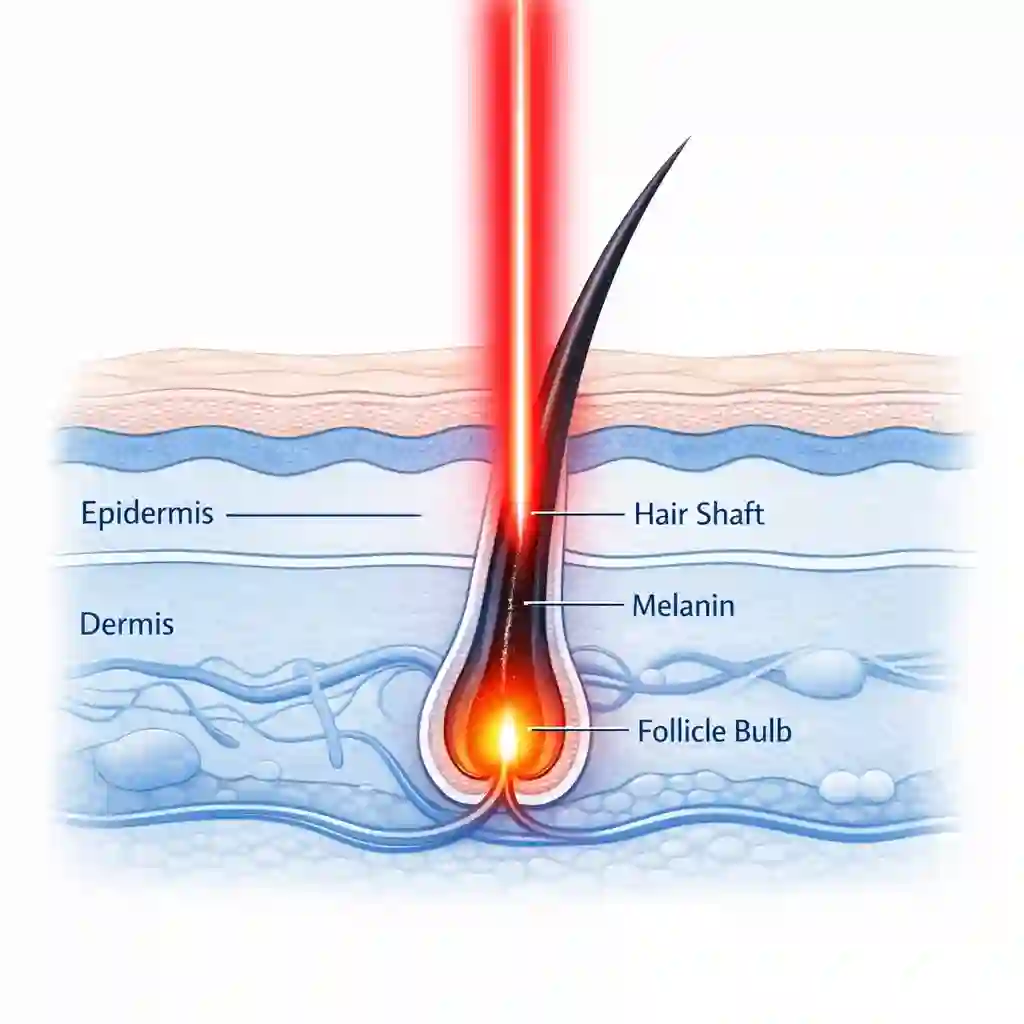
For beard laser removal, this process is highly effective on dark, coarse hair against lighter skin. The high contrast between the hair and skin allows the laser to target the follicle precisely. It does this without damaging surrounding tissue.
A single session of beard removal laser treatment is fast. It can cover the entire beard area in 15–30 minutes. Most men need 6–12 sessions spaced 4–8 weeks apart.
The FDA classifies laser devices for Permanent hair reduction, not permanent hair removal. This is an important legal and clinical distinction. Laser can significantly reduce hair density, often by 75–90%. However, some follicles may recover and produce new hair eventually. This happens especially in hormonally active areas like the face and neck.
This fact is one of the central tensions in the electrolysis vs laser hair removal debate. It is why any honest electrolysis vs laser hair removal guide cannot end with laser alone.
A dermatologist explains the clinical differences between electrolysis vs laser hair removal. They cover permanence levels, pain, and which skin types each method suits best.
dermatologist compares both methods
Expert clinical comparison
2.2 How Electrolysis Achieves True Permanent Removal
Electrolysis is the only method the FDA recognizes for permanent hair removal. It works through a Follicle destruction method that is fundamentally different from laser. A trained electrologist inserts a tiny probe directly into each hair follicle. They deliver a small electrical current. This current permanently destroys the follicle's ability to produce hair.
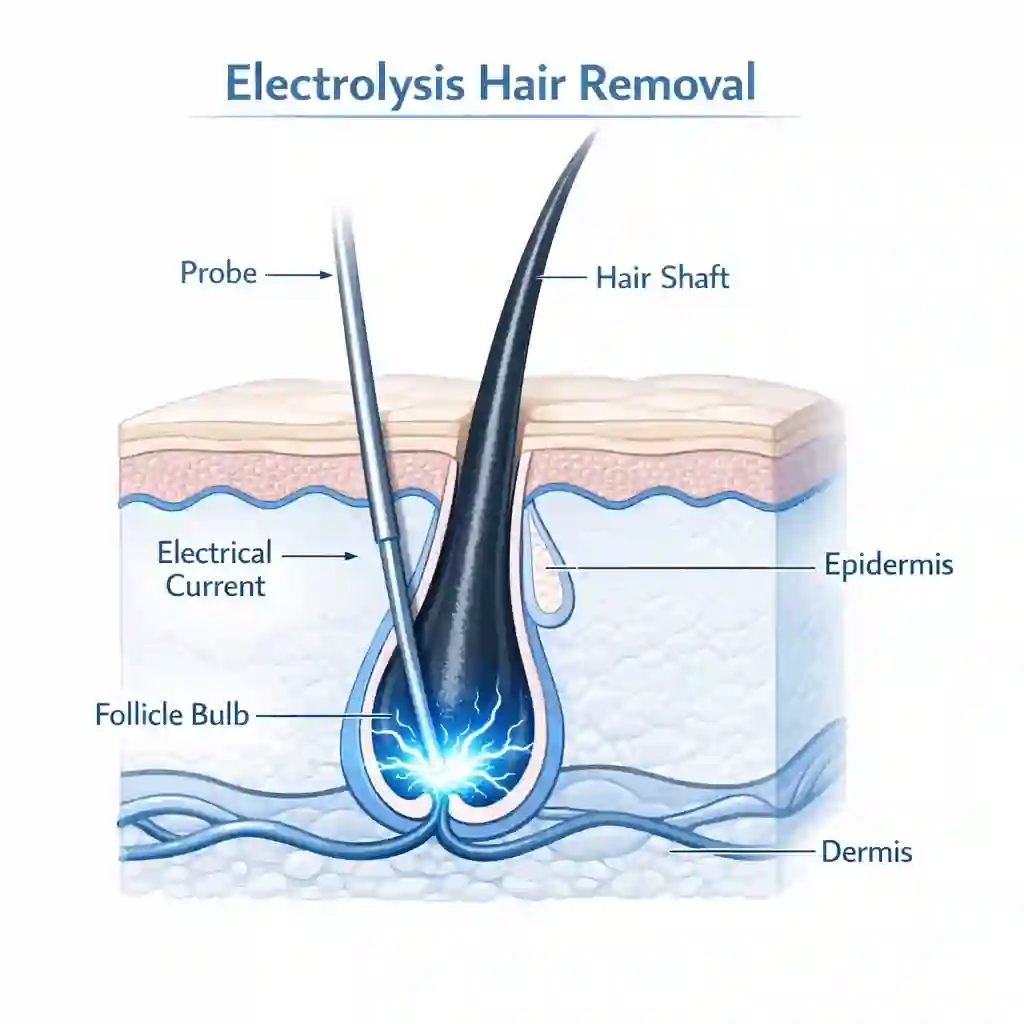
Unlike laser, electrolysis does not rely on melanin. It works on all hair colors, including blonde, red, gray, and white. It also works on all Fitzpatrick skin types, from the palest Type I to the darkest Type VI. This makes it the only universally applicable option for permanent hair removal.
The trade-off is time. Because electrolysis treats one follicle at a time, the Treatment session length is longer than laser. A full beard has thousands of individual follicles. Each requires its own treatment.
This is why complete beard electrolysis can take 100–400 hours. These hours are spread over one to two years. In the electrolysis vs laser hair removal equation, time is electrolysis's biggest cost. When considering laser hair removal beard cost versus electrolysis, remember that electrolysis costs time. This single factor ultimately shapes the electrolysis vs laser hair removal decision for most men. So, how long does electrolysis take? It depends on density, but it is a long commitment.
2.3 Side-by-Side Comparison: Electrolysis vs Laser Hair Removal
| Feature | Laser Hair Removal | ⚡ Electrolysis |
|---|---|---|
| FDA Status | Permanent reduction ✅ | Permanent removal ✅✅ |
| Works on light/gray hair | ❌ | ✅ |
| Works on dark skin (Fitzpatrick V–VI) | ⚠️ Risk of burns | ✅ Safe for all types |
| Speed per session | ✅ Fast (15–30 min) | ❌ Slow (30–120 min) |
| Total sessions needed (beard) | 6–12 sessions | 100–400 hours total |
| Pain level | Moderate (rubber band snap) | Higher (heat + sting) |
| Paradoxical hair growth risk | ⚠️ 0.6%–10% on face/neck | ✅ None |
| Long term results | Permanent reduction | True permanent removal |
| Aftercare required | Minimal | 48 hours strict care |
| Annual maintenance needed | Sometimes | ❌ None after completion |
A short video breaks down the core difference between electrolysis vs laser hair removal in under 60 seconds — a useful starting point for anyone new to the topic.
60-second method explainer
YouTube Shorts explainer
3. Beard Laser Removal Cost and Timeline: What to Expect
3.1 Laser Hair Removal Beard Cost Breakdown
Laser hair removal beard cost varies by location, clinic, and technology used. In the United States, a single session for the full beard area typically runs between $229 and $400. Most men need 6–12 sessions, which puts the total cost for a full beard laser course between $1,500 and $4,800. When men compare electrolysis vs laser hair removal on cost alone, laser almost always wins the first-impression battle.
Some clinics offer package deals that reduce the per-session price. If you're treating just the neck area (laser hair removal neck beard), costs are lower — typically $100–$200 per session. The neck is a common starting point for men who want to test electrolysis vs laser hair removal before committing to a full beard treatment.
Here is a realistic timeline for beard removal laser treatment. Sessions 1–3 (Months 0–3): 30–50% reduction in hair density. Skin begins to show improvement. Sessions 4–8 (Months 3–9): 70–85% reduction. Shaving frequency drops significantly. Sessions 9–12 (Months 9–18): Targeting remaining stubborn follicles. Maintenance phase begins.
3.2 How Long Does Electrolysis Take for a Full Beard?
How long does electrolysis take is the question every man asks before starting. The honest answer: it depends on your beard density, hair coarseness, and how often you can schedule appointments. For a full beard, most men need between 100 and 400 hours of total treatment time. This is the single biggest factor that shifts the electrolysis vs laser hair removal decision.
Real users report that a typical full-beard electrolysis journey takes 70–150 hours of actual treatment, spread across 1–2 years of appointments. At an average rate of $90–$180 per hour, the total cost ranges from $9,000 to $36,000.
The treatment session length for electrolysis is typically 30–120 minutes per visit. Most practitioners recommend starting with shorter sessions to assess your skin's response, then extending to longer sessions as your skin adapts. Knowing this helps you plan your schedule and budget when making your electrolysis vs laser hair removal decision.
Quora users share their real costs for permanent beard laser removal, with total figures ranging from $3,000 to $6,000 depending on the clinic and number of sessions needed.
3.3 Cost Comparison: Three Approaches to Beard Removal
| Approach | Total Cost Estimate | ⏱️ Total Time | Permanence |
|---|---|---|---|
| Laser only | $1,500–$4,800 | 9–18 months | Permanent reduction (may need touch-ups) |
| Electrolysis only | $9,000–$36,000 | 1–3 years | True permanent removal |
| Hybrid (Laser → Electrolysis) ✅ | $3,000–$8,000 | 12–24 months | True permanent removal |
4. The Hybrid Strategy: Laser First, Then Electrolysis
4.1 Why the Hybrid Approach Is the Smart Choice
The electrolysis vs laser hair removal debate often misses the most practical answer. That answer is to use both methods. The hybrid strategy is widely discussed in professional hair removal communities and among experienced practitioners. It is not a compromise. It is a deliberate, efficient plan. This approach resolves the core tension in electrolysis vs laser hair removal.
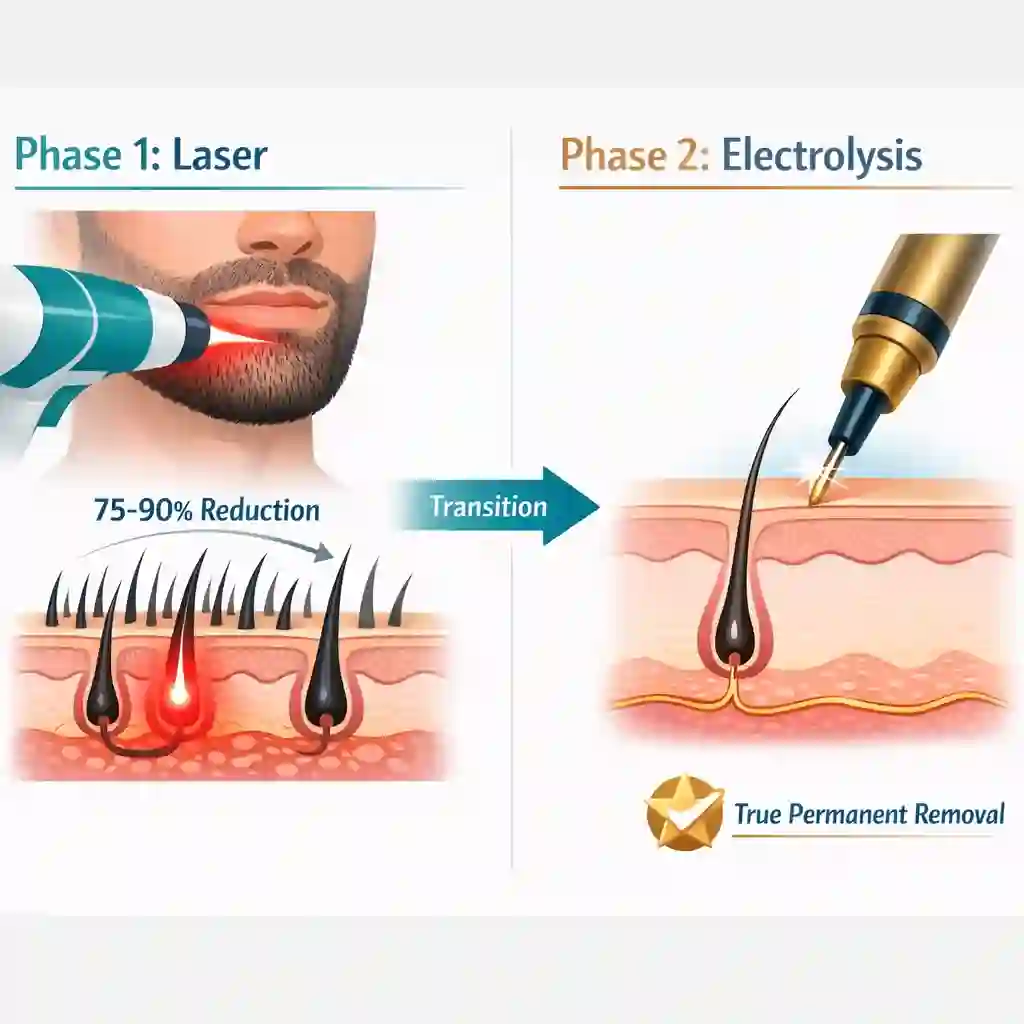
Here is the logic. Laser is fast and relatively affordable. It can eliminate 75–90% of dark, coarse beard hair in 6–10 sessions. However, laser cannot target light, gray, or fine hairs. It also does not guarantee permanent removal. Electrolysis can handle every remaining hair with 100% permanence. Yet, treating a full, untouched beard with electrolysis alone takes hundreds of hours.
The hybrid approach solves both problems at once.It offers the most practical resolution to the electrolysis vs laser hair removal dilemma. By using laser first, you dramatically reduce the number of follicles that electrolysis needs to treat. Instead of 300+ hours of electrolysis, you might only need 30–50 hours to finish the job. The long-term results are identical to pure electrolysis. You get complete, permanent removal, but at a fraction of the cost and time.
4.2 Step-by-Step Execution of the Hybrid Plan
Follow this four-step process to execute the hybrid approach effectively.
Step 1: Complete 6–10 laser sessions targeting the full beard area. Space sessions 4–8 weeks apart. This phase takes approximately 6–10 months and costs $1,500–$3,500. Focus on laser hair removal beard coverage across the chin, cheeks, upper lip, and neck.This is where the electrolysis vs laser hair removal hybrid plan begins.
Step 2: Wait 3–6 months after your final laser session. This allows any dormant follicles to enter their active growth phase. They become visible and treatable. Assess what hair remains.At this point, you will see clearly what electrolysis vs laser hair removal has accomplished. You will also see what still needs attention.
Step 3: Begin electrolysis hair removal for face to target all remaining hair. This includes lighter hairs, gray hairs, and any stubborn dark hairs that survived laser. The follicle destruction method ensures each treated hair is permanently gone.This step separates the hybrid plan from laser-only approaches in the electrolysis vs laser hair removal comparison. It is the defining move in any serious electrolysis vs laser hair removal strategy.
Step 4: Schedule periodic clearance sessions until the entire beard area is fully cleared. Most men reach this point within 12–18 months of starting electrolysis.
4.3 Real Numbers: How Much the Hybrid Approach Saves
Consider a man with a typical medium-density beard. If he chooses pure electrolysis, he might need 200 hours of treatment at $120/hour. This creates a total of $24,000 over two years.
Now, consider the same man using the hybrid approach. He might complete 8 laser sessions at $300 each ($2,400). Then, he may need only 40 hours of electrolysis at $120/hour ($4,800). The total cost is $7,200. That is a saving of over $16,000. It is more than 65% less than pure electrolysis alone.
A full-length video documents one person's complete electrolysis journey for permanent facial hair removal. It shows realistic session lengths, pain levels, and final results.
full electrolysis journey video
Complete experience and results
5. Choosing the Right Method for Your Skin and Hair Type
5.1 Dark Skin Tones (Fitzpatrick Types IV–VI): What You Need to Know
Men with darker skin tones face a specific challenge with laser hair removal. Melanin targeting technology works by detecting the contrast between dark hair and lighter skin. When skin is also dark, the laser has difficulty distinguishing between the two. This increases the risk of burns, blistering, and post-inflammatory hyperpigmentation.For these men, the electrolysis vs laser hair removal decision often leans heavily toward electrolysis.

If you have Fitzpatrick skin types IV, V, or VI and want to try beard laser removal, be careful. Seek out clinics that use Nd:YAG (1064nm) lasers. This longer wavelength penetrates deeper into the skin. It bypasses the melanin in the upper skin layers more safely than shorter-wavelength lasers.
Always request a patch test before committing to a full session.This step is non-negotiable when navigating electrolysis vs laser hair removal with darker skin.
For men with very dark skin tones, electrolysis remains the safest option. It is also the most reliable. It does not interact with skin pigmentation at all. The follicle destruction method works identically across all skin tones.
5.2 Light, Red, Gray, or Blonde Beard Hair
If your beard contains significant amounts of light, red, gray, or blonde hair, laser is not a viable primary option. Melanin targeting technology requires pigment in the hair to function. Hair with little to no melanin simply does not absorb the laser energy effectively. Treating light hair with laser produces minimal results and wastes money.
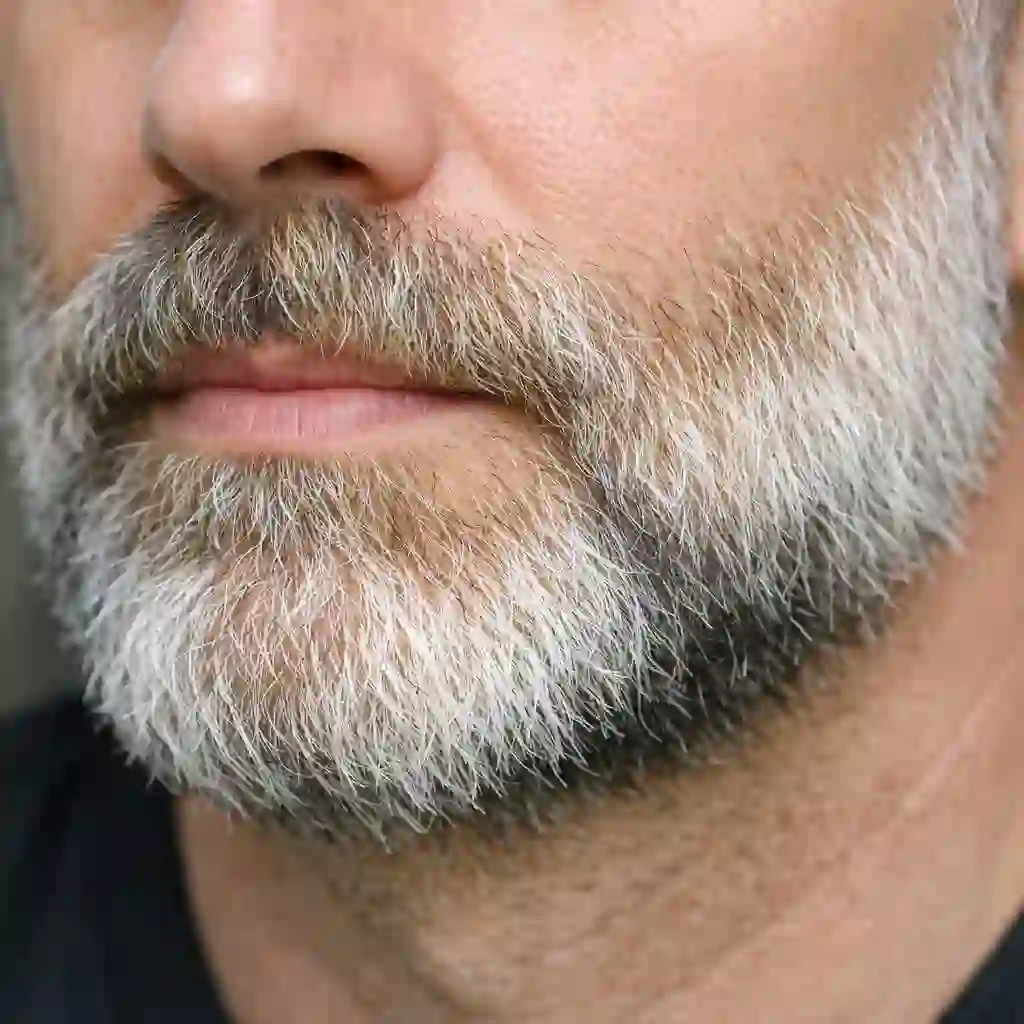
For this hair profile, the electrolysis vs laser hair removal answer is clear. Electrolysis wins outright.
For these hair types, electrolysis is the only proven permanent solution. The electrical current used in electrolysis hair removal for face does not depend on hair color. Every follicle, regardless of the hair it produces, can be permanently destroyed.
If your beard is mixed, a hybrid approach still works. This applies if you have some dark hairs and some gray or light hairs. Laser handles the dark portion, while electrolysis finishes the rest. This mixed-beard scenario is one of the most common electrolysis vs laser hair removal situations men face.
5.3 The Paradoxical Hypertrichosis Risk on the Face and Neck
One risk that most clinics do not advertise is paradoxical hypertrichosis. This is a condition where laser treatment actually stimulates hair growth instead of reducing it. This occurs in approximately 0.6%–10% of cases. The highest rates are reported on the face and neck.
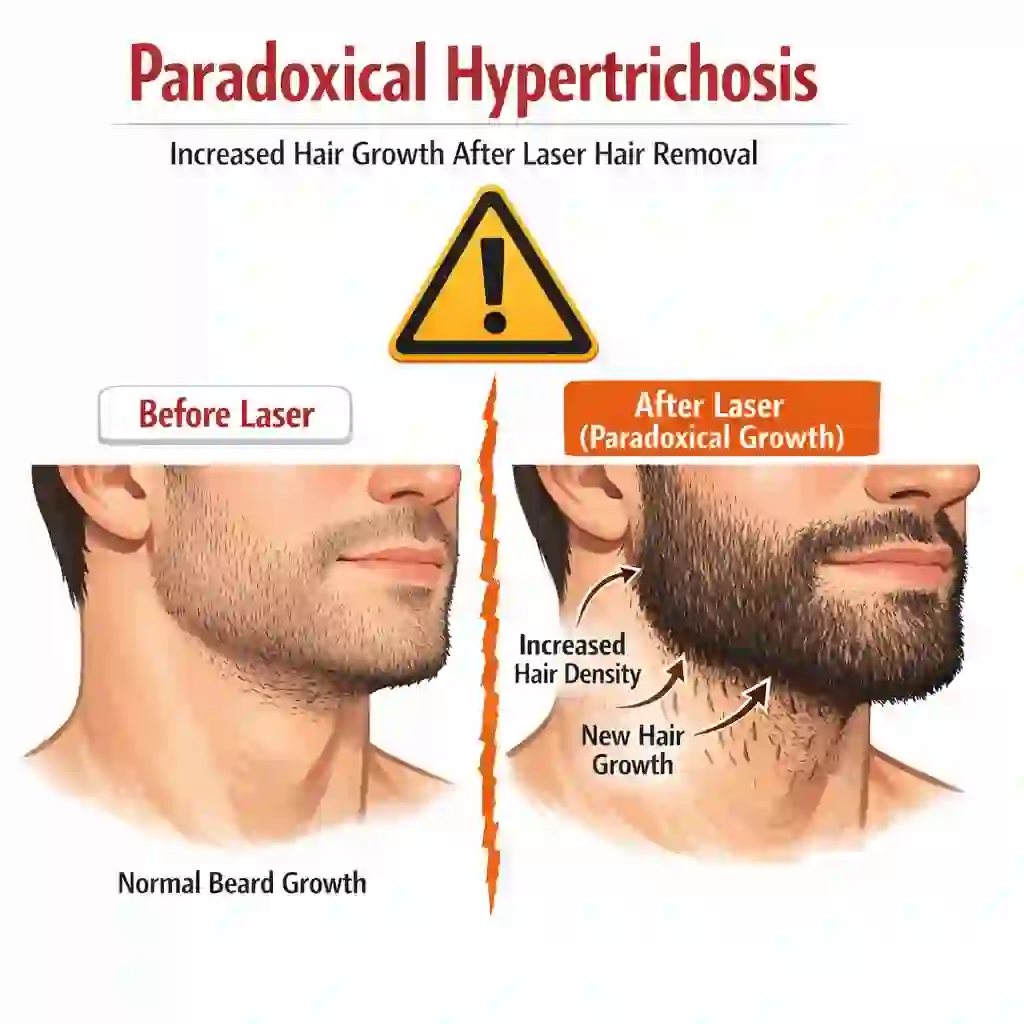
Men with darker Fitzpatrick skin types are at elevated risk. Those with hormonal imbalances are also at risk. This risk is a critical factor in the electrolysis vs laser hair removal decision. It is often overlooked.
Laser hair removal neck beard treatments carry a higher risk of this side effect than laser on the legs or arms. If you notice increased hair density or new hair growth in an area after laser treatment, stop sessions immediately. You should then consult a dermatologist.
Electrolysis is the recommended corrective treatment in these cases. It carries no risk of paradoxical hair stimulation. This asymmetry in side-effect profiles is one of the most underappreciated aspects of electrolysis vs laser hair removal for men. It is a key reason why the electrolysis vs laser hair removal decision requires more than a simple price comparison.
| Skin & Hair Profile | ✅ Recommended Method | ⚠️ Caution |
|---|---|---|
| Light skin + dark beard | Laser first, then electrolysis | ❌ Avoid IPL devices |
| Dark skin (Fitzpatrick IV–VI) + dark beard | Electrolysis or Nd:YAG laser only | ❌ Avoid standard laser |
| Any skin + light/gray/blonde beard | Electrolysis only | ❌ Laser ineffective |
| Any skin + mixed beard (dark + light) | Hybrid approach | ⚠️ Plan both phases |
| History of paradoxical hair growth | Electrolysis only | ❌ Stop laser immediately |
6. Your Action Plan: From First Consultation to Final Results
6.1 Five Questions to Ask Before Choosing a Provider
Not all clinics are equal. Before booking any beard removal laser or electrolysis treatment, ask these five questions. First, what laser technology do you use, and is it FDA-cleared for my skin type? Second, do you have before-and-after photos of male beard removal cases? Third, how do you calculate treatment session length and total session estimates? Fourth, what is your policy if I experience paradoxical hair growth? Fifth, do you offer a hybrid plan combining laser and electrolysis?
A reputable provider will answer all five questions clearly. If they push you toward one method without assessing your hair type, skin tone, and goals, look elsewhere.Understanding electrolysis vs laser hair removal helps you choose the right clinic as much as the treatment method itself.
6.2 Pre- and Post-Treatment Care Essentials
Proper care before and after treatment directly affects your results. Following pre-care rules is critical for success with electrolysis vs laser hair removal for your beard. Before any session — whether laser hair removal beard or electrolysis — stop waxing, plucking, or threading at least four weeks in advance. The follicle must be intact for either method to work. Shaving is fine and actually recommended before laser sessions.
After treatment, keep the area clean and moisturized. Avoid direct sun exposure for at least 48 hours. Do not apply fragranced products or exfoliants to treated skin for 24–48 hours. For electrolysis, the treated area may show small red marks or slight swelling — this is normal and resolves within a day or two.
Consistent aftercare between sessions also matters. Gentle exfoliation twice a week helps prevent ingrown hairs. Sunscreen on treated areas reduces the risk of pigmentation changes, especially for men with darker skin tones. Committing to quality aftercare maximizes the outcome of your electrolysis vs laser hair removal treatment plan.
7. What will you do?
When deciding between permanent hair removal solutions, electrolysis vs laser hair removal is the key comparison to guide you. Laser is faster and more affordable upfront. Electrolysis is the only method that delivers true, FDA-recognized permanent hair removal. For most men, especially those with mixed hair colors, darker skin tones, or a history of razor irritation, the hybrid approach offers the best of both worlds. That is the real answer to electrolysis vs laser hair removal: not a single winner, but a smart plan.
Start with laser to reduce the bulk of your beard hair efficiently. Finish with electrolysis to permanently clear what remains. The long term results are complete and lasting. Sticking to a structured strategy ensures your electrolysis vs laser hair removal journey ends with smooth, hair-free skin.
Ready to stop shaving for good? This tool can show you your hairless state. Why not take a look at yourself before shaving?
This article discover a complete laser beard removal guide explaining how the technology works, who is a good candidate, and what realistic long-term results you can expect from multiple treatment sessions.