Beard Styles by Face Shape: The Complete Guide to Finding Your Best Beard
Many men embark on the journey of growing a beard, only to find the result doesn't quite match their expectations. The frustration often stems from a lack of understanding about how facial hair interacts with their unique facial structure. It's a common dilemma: a beard that looks fantastic on one person might appear disproportionate or unflattering on another.
This guide aims to demystify the process, providing a clear roadmap for identifying your face shape and selecting a beard style that enhances your natural features. We understand the challenge, especially for those who feel lost without a clear starting point, or for bald men seeking to redefine their facial aesthetics.
By the end of this comprehensive guide, you will possess the knowledge to confidently choose a beard style that complements your face shape, ensuring a distinguished and harmonious look. This comprehensive resource will equip you with the insights needed to cultivate a beard that not only looks great but also boosts your confidence and personal style.
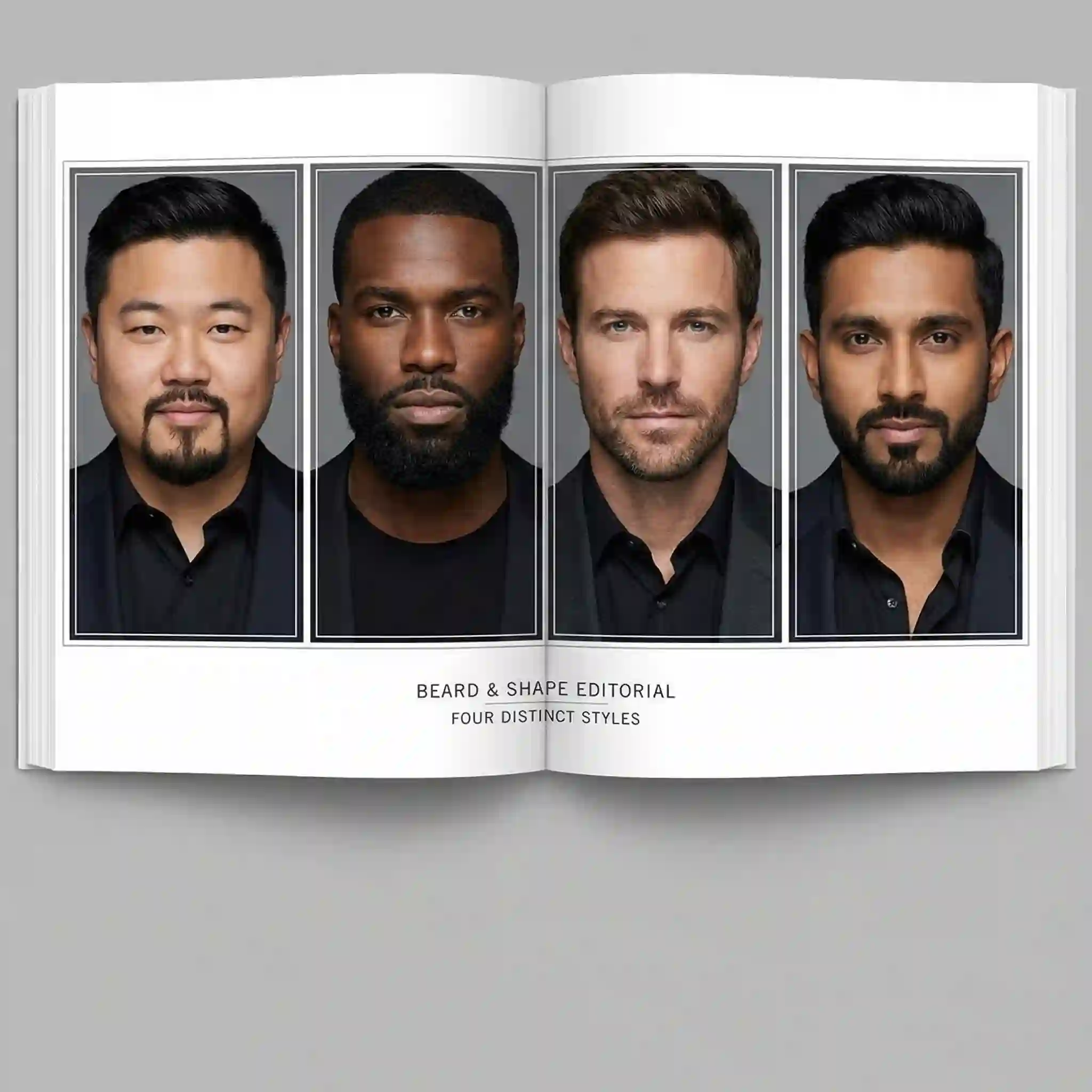
We delve into the nuances of facial geometry and how it dictates the most flattering beard choices, moving beyond generic advice to offer tailored recommendations. Understanding these fundamental principles is the first step towards achieving a truly exceptional beard that reflects your individuality and enhances your overall appearance.
1. How to Identify Your Face Shape
Understanding your face shape is the foundational step in choosing a beard style that truly suits you. It's not about conforming to a trend, but rather about leveraging your natural bone structure to create a balanced and appealing aesthetic.
Many men overlook this crucial step, leading to beard choices that can inadvertently highlight less desirable features or create an unbalanced appearance. Identifying your face shape provides a strategic advantage, allowing you to sculpt your beard with purpose and precision.
This initial assessment is paramount, as it sets the stage for all subsequent styling decisions, ensuring that your efforts are both effective and aesthetically pleasing. A clear understanding of your facial contours will empower you to make informed decisions, transforming your beard from a mere growth into a deliberate and stylish statement.
1.1 Three steps to measure your face shape at home
Identifying your face shape can be done with a few simple measurements and a mirror. First, stand in front of a mirror with good lighting and pull your hair back from your face.

Second, use a flexible measuring tape to measure the widest points of your forehead, cheekbones, and jawline. Also, measure the length of your face from the center of your hairline to the bottom of your chin.

Third, compare these measurements to common face shape characteristics. For instance, a round face will have similar length and width measurements, while an oval face will be longer than it is wide.
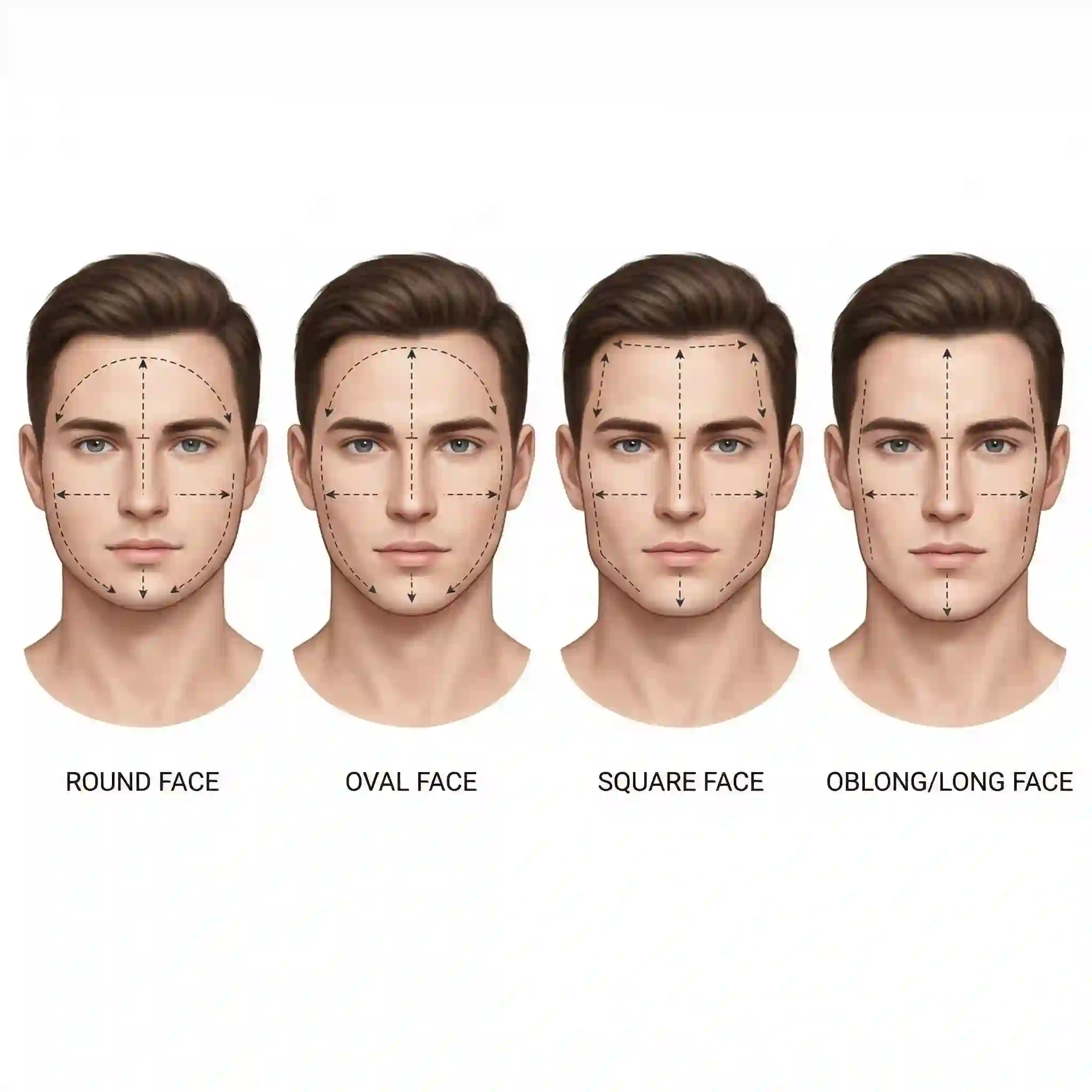
This methodical approach helps eliminate guesswork and provides accurate data for your assessment. Taking these precise measurements ensures a more objective and reliable determination of your face shape, moving beyond subjective visual appraisals.
This process ensures that your beard styling decisions are based on concrete data, not just assumptions.
Research indicates that face shapes are not evenly distributed among men. For example, studies suggest that hyperleptoprosopic (long and narrow) face types are dominant in a significant portion of the male population, with some research indicating up to 70% in certain demographics.
Oval faces are often considered the most common and versatile, but a variety of shapes exist, each with its own unique characteristics. Understanding these distributions can help contextualize your own face shape within the broader population.
This statistical insight highlights the diversity of facial structures and underscores the importance of personalized styling approaches. It also explains why a one-size-fits-all approach to beard styling is rarely effective.
Recognizing this diversity is crucial for selecting a beard that truly complements your individual features.
1.2 Common mistakes when identifying face shape
One of the most common mistakes in identifying face shape is relying solely on visual estimation without taking actual measurements. What appears to be a square face might, upon measurement, reveal characteristics closer to an oblong or even a round shape.
Another frequent error is allowing hair, whether on the head or existing facial hair, to obscure the natural lines of the face. This can lead to misinterpretations of the jawline, cheekbones, and forehead.
It is crucial to ensure a clear view of your facial structure for an accurate assessment. Furthermore, some individuals tend to overcomplicate the process, searching for obscure categories rather than focusing on the primary, well-defined face shapes.
Simplicity and precision are key to avoiding these pitfalls. Over-reliance on celebrity examples without considering individual variations can also lead to misidentification.
It is important to focus on your own unique features rather than trying to force a fit with a perceived ideal. Avoiding these common errors will lead to a more accurate assessment and ultimately, a more flattering beard style.
1.3 Why face shape is the starting point for every beard decision
Your face shape acts as the fundamental blueprint for any successful beard style. Just as a tailor customizes a suit to fit a body, a beard should be tailored to complement your facial contours.
The right beard can balance proportions, soften sharp angles, or add definition where it's needed most. Conversely, an ill-suited beard can exaggerate undesirable features, making a face appear wider, shorter, or disproportionate.
By understanding your face shape, you gain the power to manipulate visual perception, creating an illusion of ideal symmetry and enhancing your overall appearance. This strategic approach ensures that your beard works with, rather than against, your natural features, leading to a more polished and confident look.
It empowers you to make intentional choices that contribute positively to your overall aesthetic, rather than leaving it to chance. This foundational knowledge is what separates a truly distinguished beard from a merely grown one.
2. The Best Beard for Every Face Shape
Choosing the ideal beard style is an art form that begins with recognizing your unique facial geometry. Each face shape presents distinct characteristics that can be either accentuated or softened by the strategic placement and styling of facial hair.
The goal is to create an optical illusion, bringing your face closer to the universally appealing oval shape, or simply enhancing your best features. This section will guide you through the most effective beard styles for each common face shape, providing actionable advice to help you achieve a harmonious and stylish look.
By understanding these principles, you can transform your beard from a simple growth into a powerful statement of personal style. This detailed breakdown will help you navigate the vast array of beard options, ensuring you select a style that truly complements your individual facial structure.
The right beard can dramatically alter perceptions, creating a more balanced and attractive profile.
2.1 Round face: how to make your face look longer
For men with round faces, the primary objective is to add length and create the illusion of a more angular jawline. A round face typically has similar width and length measurements, with softer angles and a less defined jaw.
The best beard styles for this shape are those that are shorter on the sides and longer on the chin. This vertical emphasis helps to elongate the face, drawing the eye downwards and creating a more oval appearance.
Styles like a Van Dyke, a goatee with trimmed sides, or a short box beard can be particularly effective. These styles add definition to the lower half of the face without adding unnecessary bulk to the cheeks.
The key is to avoid excessive fullness on the sides, which would only make the face appear rounder. Instead, focus on creating clean lines and a well-groomed, elongated silhouette.
The strategic shaping of the beard can visually slim the face, providing a more chiseled and refined look. This careful sculpting ensures that the beard works to your advantage, enhancing your natural features.
Consider the actor Zach Galifianakis, who, despite having a naturally round face, has often sported beards that effectively complement his features. His fuller, yet well-maintained, beards often extend slightly below the chin, adding a vertical element that subtly counteracts the roundness of his face.
This demonstrates how a carefully chosen beard can enhance a round face, creating a more balanced and distinguished appearance without drastically altering one's natural look. His beard choices often provide a visual example of how to add structure and length.
This approach allows him to maintain his signature look while still benefiting from the elongating effects of a well-styled beard. His example proves that a round face is no barrier to a fantastic beard.
In this article, we have compiled in detail all the beard styles suitable for round faces:

2.2 Square face: softening strong angles
Men with square faces are characterized by strong, angular jawlines and a forehead, cheekbones, and jaw that are roughly the same width. While a square jaw is often considered a masculine trait, the goal with a beard is typically to soften these sharp angles and add a touch of roundness or length.
This can be achieved by growing a beard that is fuller on the chin and slightly rounded at the bottom, while keeping the sides relatively shorter. Styles such as a circle beard, a goatee, or a full beard that is carefully trimmed to be softer at the corners can work wonders.
The aim is to reduce the harshness of the jawline and create a more balanced facial profile. Avoid sharp, angular beard styles that would only accentuate the squareness of the face.
Instead, opt for styles that introduce curves and a sense of flow. This softening effect can create a more approachable and refined aesthetic, without diminishing the inherent strength of the square face.
The right beard can provide a sophisticated contrast to a strong jawline.
2.3 Oval face: the most versatile shape
The oval face shape is widely considered the most balanced and versatile, making it the ideal canvas for almost any beard style. An oval face is characterized by being longer than it is wide, with a slightly rounded jawline and a forehead that is slightly wider than the chin.
Men with oval faces have the luxury of experimenting with a wide range of beard styles without fear of disrupting their facial harmony. From short stubble to a full, majestic beard, most styles will complement an oval face.
However, it's still important to maintain proportion. Extremely long or wide beards can sometimes make an oval face appear too long or too wide, respectively.
The key is to choose a style that maintains the natural balance of the face, enhancing its inherent symmetry rather than overpowering it. This versatility allows for creative expression and frequent changes in style.
The natural proportions of an oval face mean that most beard styles will naturally fall into a flattering arrangement, requiring less corrective shaping. This freedom allows for greater personal expression and adaptability in grooming choices.
2.4 Oblong/long face: adding width and balance
An oblong or long face is similar to an oval face but is noticeably longer, often with a narrow chin and a high forehead. The primary objective for men with this face shape is to add width to the sides of the face and reduce the appearance of excessive length.
This can be achieved by growing a beard that is fuller on the sides and shorter on the chin. Styles like a full, bushy beard that extends outwards, or a Mutton Chops beard, can effectively add horizontal volume.
A shorter, well-groomed beard that doesn't add significant length below the chin is also advisable. Avoid styles that are long and narrow, such as a goatee or a Van Dyke, as these will only further elongate the face.
The goal is to create a visual break in the length and introduce a sense of balance and proportion. By focusing on width, you can create a more harmonious facial aesthetic.
This strategic shaping helps to counteract the vertical dominance of the oblong face, creating a more balanced and aesthetically pleasing profile. The right beard can transform a long face into one that appears more proportionate and robust.
2.5 Heart and diamond face: balancing the lower half
Heart and diamond face shapes share a common characteristic: a wider forehead or cheekbones that taper down to a narrower chin. For a heart-shaped face, the forehead is the widest part, while a diamond face has prominent cheekbones.
In both cases, the goal is to add volume and width to the lower half of the face to balance the broader upper half. This can be achieved with beard styles that are fuller around the jawline and chin.
A full beard, a Ducktail, or a Balbo can effectively add the necessary bulk to the lower face, creating a more proportionate appearance. Avoid styles that are very short or thin around the chin, as these will only emphasize the narrowness of the jaw.
The aim is to create a sense of fullness and strength in the lower face, bringing it into better alignment with the wider upper regions. This strategic approach helps to create a more balanced and aesthetically pleasing facial profile.
The added volume below the cheekbones helps to fill out the narrower lower face, creating a more harmonious overall look. This careful consideration ensures that the beard acts as a counterpoint to the wider upper face, achieving visual equilibrium.
This paper focuses on patchy beard growth, offering 7 practical styling hacks, including face shape identification and growth potential assessment to avoid trial-and-error costs.

This paper covers 15 trending beard styles, explains adaptation logic for 7 face shapes, with scientific measurement methods, trimming tips and AI virtual try-on tool recommendations.
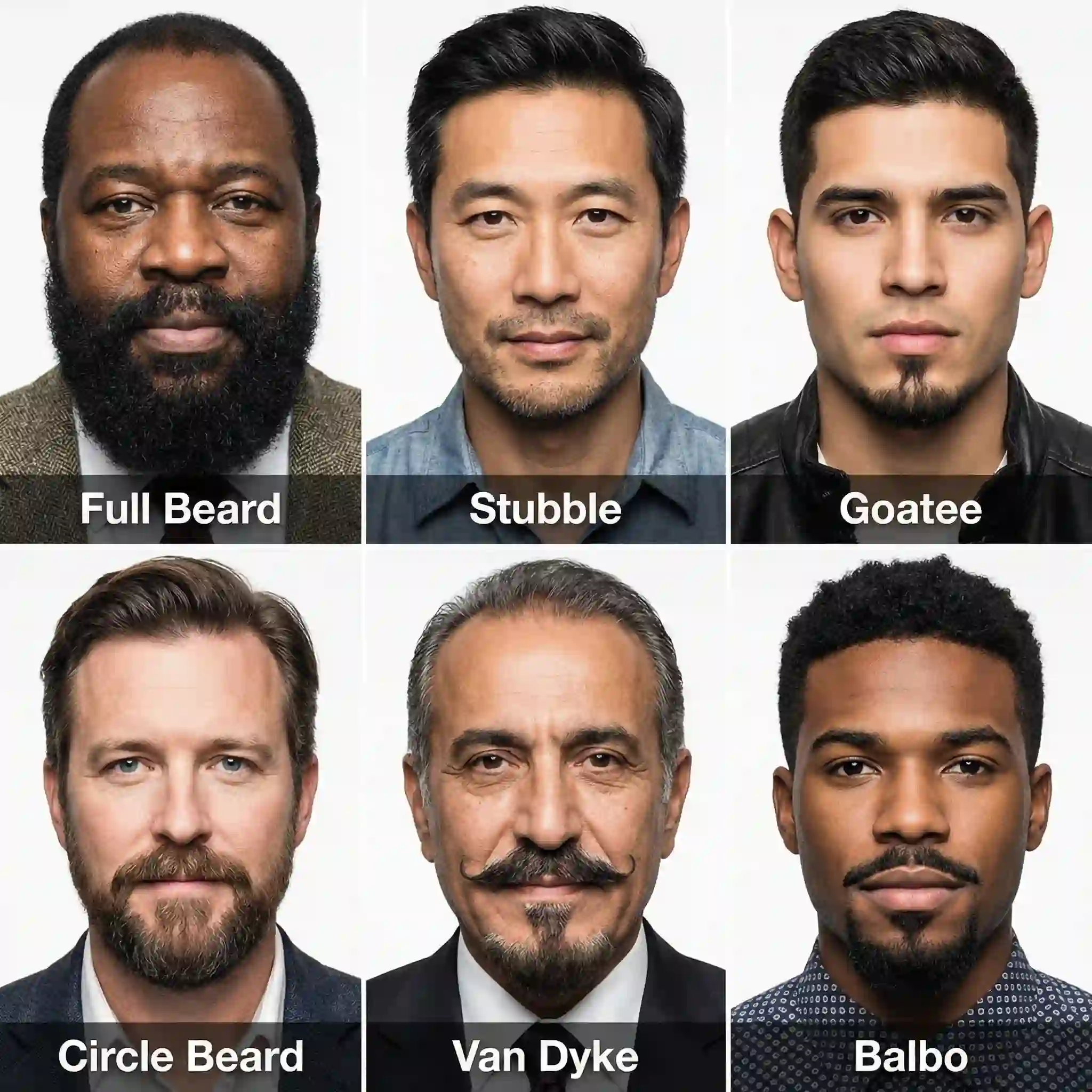
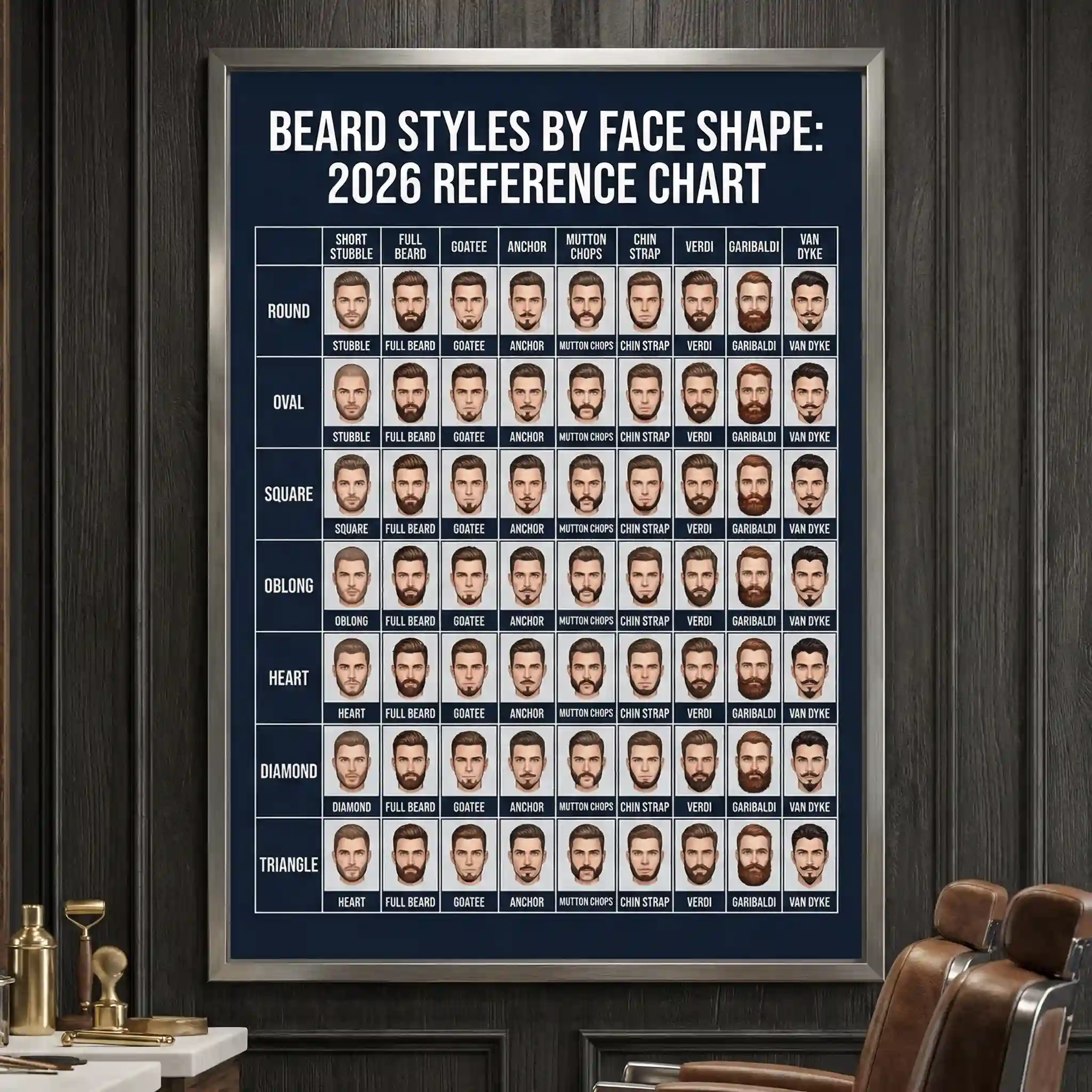
The core guide with 2026 face shape-beard chart, categorizes 15 styles as "recommended/avoided", enables 3-minute face shape testing for precise selection and daily maintenance.
3. Beard Styles for Bald Men
For bald men, the beard takes on an even more significant role in defining their overall appearance. Without hair on the head to frame the face, the beard becomes the primary focal point, drawing attention and shaping the perception of facial structure.
This means that the choice of beard style is not just an accessory but a crucial element in creating a balanced and confident look. A well-chosen beard can add character, masculinity, and a sense of completeness to a bald head, transforming what might be perceived as a lack of hair into a deliberate and stylish choice.
It allows for a powerful statement of personal style and can significantly enhance facial aesthetics. The beard essentially becomes the hair on the head, offering a canvas for self-expression and style.
This unique dynamic means that bald men have a distinct opportunity to leverage their facial hair as a powerful tool for personal branding and aesthetic enhancement. The synergy between a bald head and a well-groomed beard can create a striking and memorable image.
3.1 Why the beard becomes the focal point when you're bald
When a man chooses to embrace baldness, or it occurs naturally, the visual emphasis on his head shifts dramatically. The absence of hair means that the face, and particularly the lower half of the face, becomes the dominant feature.
In this context, a beard is no longer just an addition; it becomes an integral part of the facial landscape, acting as a frame and a statement piece. It can add definition to the jawline, create the illusion of a stronger chin, or simply provide a sense of ruggedness and maturity.
The beard effectively replaces the role that hair once played in balancing facial proportions and conveying personal style. This makes the selection of the right beard style even more critical for bald men, as it directly impacts their overall aesthetic.
The beard becomes a powerful tool for shaping perception and conveying a desired image, making it a central element of a bald man's personal presentation. It offers an opportunity to sculpt and define the face in a way that hair on the head cannot.
Consider the iconic look of Jason Statham, a prominent actor known for his bald head and consistently well-groomed beard. His beard is often a short, neatly trimmed style that perfectly complements his strong jawline and facial structure.
It adds a rugged yet sophisticated element to his appearance, demonstrating how a bald head paired with the right beard can create a powerful and distinctive image. Statham's choice of beard style enhances his masculine features without overpowering them, serving as an excellent example of how to achieve a balanced and impactful look when bald.
His consistent choice of a well-defined beard underscores its importance in his overall aesthetic, making him a prime example of successful bald and bearded styling. His look is a testament to the power of a well-chosen beard.
3.2 Best beard styles for bald heads
For bald men, the best beard styles are those that create balance and enhance facial features without overwhelming the face. A short, well-maintained beard, such as a stubble beard or a short boxed beard, can add definition to the jawline and chin without adding excessive bulk.
These styles offer a clean, sharp look that complements the minimalist aesthetic of a bald head. For those seeking more volume, a medium-length full beard can work well, provided it is kept neat and sculpted to avoid a messy appearance.

The key is to ensure that the beard is proportionate to the face and head, creating a harmonious overall silhouette. Experimentation with different lengths and shapes can help bald men find the perfect beard to express their individual style and enhance their natural features.
The goal is to create a cohesive look where the beard and bald head work together to present a strong and confident image. This synergy between a bald head and a well-chosen beard can project an image of confidence, maturity, and deliberate style, making it a powerful personal statement.
The right beard can truly complete the bald aesthetic.
If you have recently shaved your head or are simply looking to optimize your hairless grooming routine, exploring dedicated styles is crucial. We have compiled a comprehensive step-by-step deep dive into selecting the perfect facial hair that seamlessly complements your smooth scalp, ensuring a commanding and confident masculine image.

3.3 What to avoid: beard-and-haircut combos that clash
While the focus for bald men is primarily on the beard, it's still important to consider how it interacts with any remaining hair or the overall head shape. One common pitfall is choosing a beard style that is too long or unruly, which can create an unbalanced look, making the head appear smaller or the face disproportionately large.
Another mistake is neglecting proper grooming; a bald head often highlights any unkempt facial hair. For men with very little hair on the sides of their head, a beard that is too wide can make the face appear rounder than it is.
The goal is always to create a sense of balance and intentionality. Avoid styles that seem to fight against the natural lines of your face or head.
Instead, opt for clean, well-defined styles that complement your baldness, creating a cohesive and polished appearance. A beard should enhance, not detract from, the overall clean and confident aesthetic of a bald man.
This means avoiding styles that create visual clutter or draw attention away from the intentionality of the bald and bearded look. Careful consideration of these factors ensures a harmonious and stylish outcome.
4. Using a Face Shape Beard Chart
Navigating the myriad of beard styles can be daunting, but a face shape beard chart serves as an invaluable tool in simplifying this process. These charts are designed to visually guide you towards styles that are most likely to flatter your specific facial structure.
They act as a quick reference, translating the principles of facial geometry into practical beard recommendations. By consulting such a chart, you can quickly narrow down your options, saving time and avoiding the trial-and-error that often accompanies beard styling.
It's a strategic approach to grooming that empowers you to make informed decisions about your facial hair, ensuring that your efforts result in a look that is both stylish and complementary to your unique features. This systematic approach removes much of the guesswork, allowing for more confident and effective styling choices.
It provides a clear framework for understanding how different beard shapes interact with various face types, making the selection process much easier.
4.1 How to read and use a beard chart

Reading a beard chart is straightforward and begins with accurately identifying your face shape, as discussed earlier. Once you know your face shape, locate it on the chart.
The chart will then typically present a selection of recommended beard styles that are known to complement that particular shape. Pay attention to the visual cues provided, such as length, width, and overall silhouette of the recommended beards.
For instance, a chart for a round face might suggest styles that add length, while one for a square face might recommend styles that soften angles. Use the chart as a starting point, understanding that it offers general guidelines rather than strict rules.
It's a tool to inspire and inform your choices, helping you visualize how different styles might look on your face. Remember, personal preference and comfort are also crucial factors in your final decision.
The chart serves as a valuable educational resource, helping you to understand the underlying principles of beard and face shape harmony. It empowers you to make informed decisions that align with both aesthetic principles and your personal comfort.
This guidance ensures that your beard choice is both aesthetically pleasing and personally satisfying.
4.2 Online tools that help you visualize beard styles
In today's digital age, technology offers powerful solutions for visualizing beard styles before committing to a trim or growth. Numerous online tools and mobile applications leverage augmented reality (AR) to allow you to virtually try on different beard styles.
These tools typically use your device's camera to overlay various beard types onto your face in real-time. This allows for a risk-free exploration of different looks, helping you to see how a full beard, a goatee, or even a specific mustache style would appear on your unique face shape.
Some platforms also offer photo upload options, where you can experiment with styles on a static image. While these tools are not always perfectly accurate, they provide an excellent visual aid, helping you to narrow down your choices and gain confidence before making any permanent changes to your facial hair.
They are particularly useful for visualizing how a new style might alter your overall appearance, offering a glimpse into your potential future look. This virtual try-on experience can significantly reduce the anxiety associated with making a significant change to your facial hair, making the process more enjoyable and less daunting.
If you are tired of relying entirely on imagination or static charts to find the perfect look, modern AI technology has provided a revolutionary shortcut. Experience an interactive virtual try-on that eliminates all the grooming guesswork, allowing you to instantly visualize the most flattering options tailored precisely for your unique features.
4.3 When to ask a barber instead of guessing
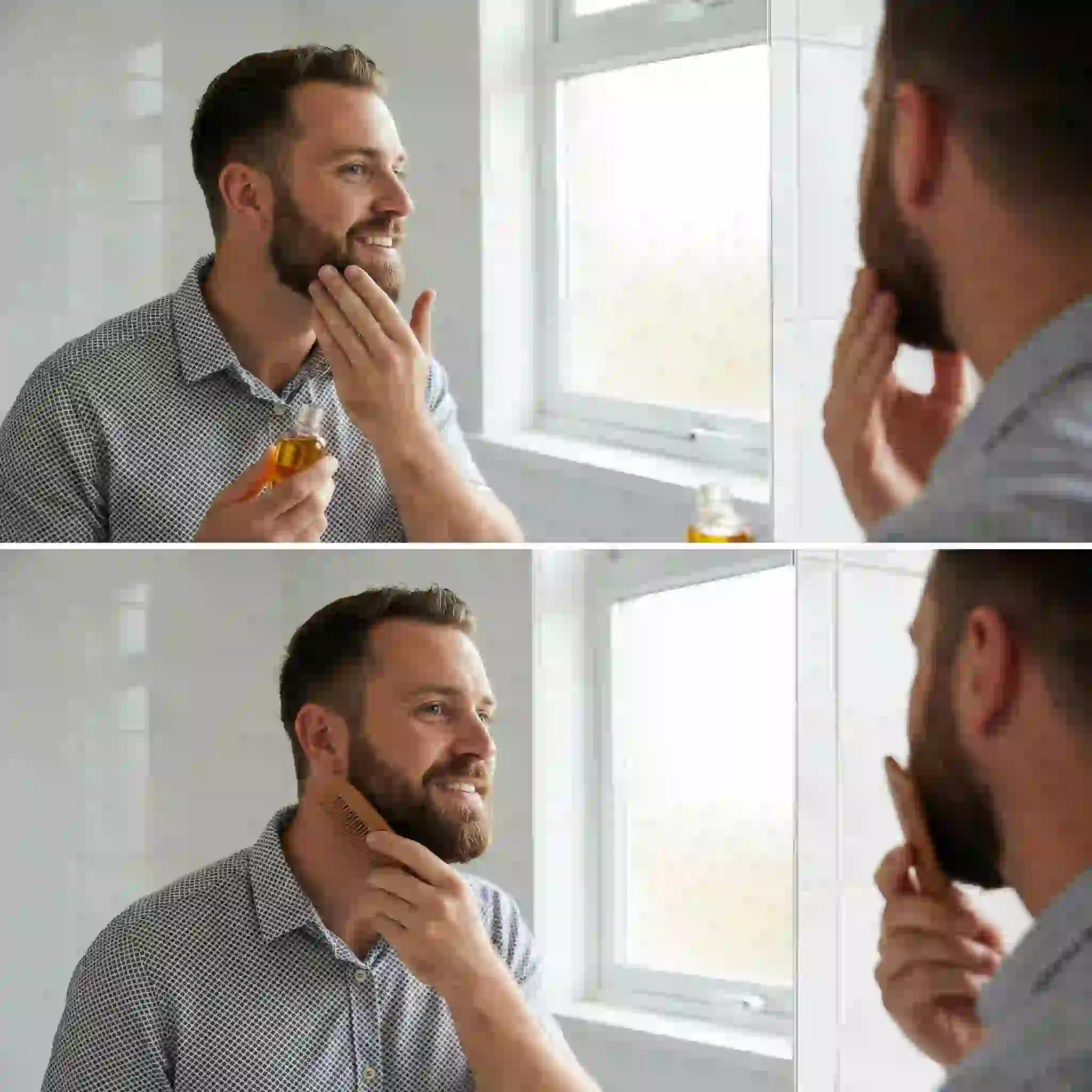
While online tools and beard charts provide valuable guidance, there are times when the expertise of a professional barber is indispensable. If you're struggling to accurately identify your face shape, or if you're unsure about how to interpret the recommendations from a chart, a barber can offer personalized advice.
They possess a keen eye for facial proportions and an understanding of how different beard styles can enhance or detract from your features. A skilled barber can also provide precise trimming and shaping services, ensuring that your chosen style is executed flawlessly.
Furthermore, if you're considering a more complex or intricate beard style, or if you're looking for advice on beard care and maintenance tailored to your specific hair type, a barber is an invaluable resource. Their professional insight can save you from costly mistakes and help you achieve a truly refined and polished look.
Investing in a professional consultation can elevate your beard game significantly, ensuring a result that is both stylish and perfectly suited to you. A barber's expertise extends beyond just cutting hair; they are artists who understand facial aesthetics and can guide you to your best beard.
5. Conclusion + CTA
Finding the perfect beard style is not about following fleeting trends, but about understanding the timeless principles of facial harmony and proportion. By accurately identifying your face shape, you unlock the secret to a beard that not only looks good but genuinely enhances your natural features.
Whether you aim to elongate a round face, soften the angles of a square jaw, or simply maintain the versatility of an oval shape, the right beard can transform your appearance. Remember that for bald men, the beard takes on an even greater significance, becoming a central element of personal style.
Use our tools to try different looks before you grow or trim—perfect if you're unsure about a beard, curious which style fits you, or just want to see what you or your partner would look like clean‑shaven for fun. Your beard is an extension of your identity, and with smart, simple tests, you can choose with confidence and style.
Explore our free visualization tools and find your best look at beardremover.com. Your journey to the perfect beard starts here.
This guide has given you the core knowledge and practical tools to move forward with confidence, turning your beard into a source of pride and a reflection of your personal taste. We encourage you to experiment, while always keeping your unique facial structure in mind for a look that feels truly yours.
Take the time to understand your face, and your beard will always work in your favor.