
5 Brutal Truths About Beard Removal Laser: Don't Regret It After You Pay
We all see promises of a permanent end to shaving and smooth skin. But behind these ads are key facts that can turn your investment into a costly mistake.

The reality: beard removal laser isn't a one-size-fits-all answer. It’s complex and demands honesty. This guide arms you with 5 crucial truths, not discouragement.
Our goal is to ensure that when you decide on a beard removal laser, your decision is smart, confident, and completely regret-free. Let's uncover the facts.
1.Cruel Truth #1: “Permanent” Doesn’t Mean 100% Gone—Understanding Permanent Beard Removal
The biggest misconception about beard removal laser starts with the word 'permanent.' Many people think this means every single hair will be completely eliminated forever. However, this is not the scientific definition of permanent beard removal. You must first understand this truth to set realistic expectations and avoid disappointment.
1.1 Redefining “Permanent.”
According to the FDA, the correct term is "permanent hair reduction." This is officially defined as a stable decrease in the number of hairs that grow back. The keyword here is “reduction,” not “elimination.” Clinical studies show the power of a beard removal laser course.
It typically results in an 80% to 95% reduction in hair. The vast majority of coarse, dark beard hairs will be gone. You may still have some very fine, light-colored vellus hairs. However, these are barely noticeable.
1.2 Why Multiple Treatments are Non-Negotiable: The Hair Growth Cycle
Why can't a single beard removal laser session solve the problem? The answer lies in our hair’s growth cycle. Each hair goes through three phases: Anagen (growth), Catagen (transition), and Telogen (resting). Laser energy is only effective on hairs in the active Anagen growth phase. This is when the hair follicle is most receptive to the laser’s heat.
At any given time, your beard hairs are in different phases of this cycle. A single beard removal laser treatment has its limits. It can only target the hairs currently in the growth phase. This is why a professional plan requires sessions spaced 4 to 6 weeks apart. This schedule systematically targets each new hair wave. It catches them as they enter the Anagen phase.

1.3 The Long-Term Reality: The Truth About Touch-Ups
Years after completing your full treatment course, you might see changes. You might notice a few stray hairs popping up. This is not the sign that the treatment failed. It is a normal result of hormonal changes. Dormant hair follicles can also become active over time. This is a natural biological process.
To maintain the best results, many people opt for “touch-up sessions.” This might involve one beard removal laser treatment a year or every few years to clear away any new growth. Think of this as smart maintenance, not a failure. After all, the ultimate goal of the beard removal laser is freedom from the daily chore of shaving. The goal is not necessarily an absolutely hairless face for life.
For example,laser treatment is not a one-and-done solution; in this video, a dermatologist reacts to real beard laser removal cases and breaks down how repeated sessions affect coarse beard hair versus finer facial hair over time.
Laser Beard Removal
2.Cruel Truth #2: The Real Cost is Far More Than the Single-Session Price
You'll see enticing ads offering a '$49 first session' for beard removal laser, but the true cost goes beyond introductory prices. Understanding the complete expense helps you plan realistically and avoid surprises.
2.1 Beware the Low-Price Trap: Why Single Sessions are Useless
Those low introductory prices are a marketing tactic, plain and simple. Their goal isn't to give you results. It's to get you in the door for a consultation where they can sell you an expensive package deal. A real beard removal laser treatment is not like a free filter you find online. It is a serious medical procedure that requires commitment.
For stubborn, hormone-driven beard hair, a single laser session won't produce visible, lasting change. When considering total cost, focus on the multiple sessions required for real results.
2.2 The Three Core Factors of Your Total Bill
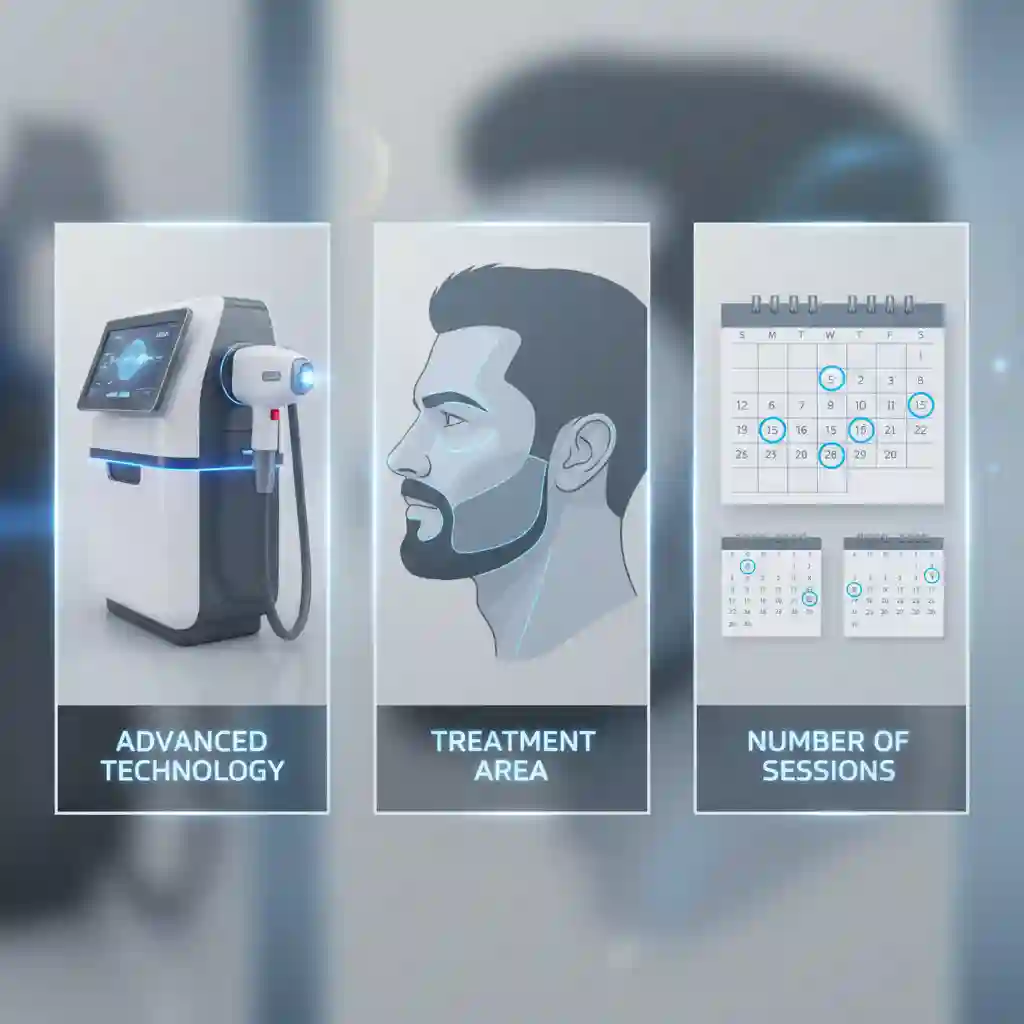
Three main factors determine the full cost of a beard removal laser package. The first is technology costs. Top-tier, medical-grade lasers (like Alexandrite or Nd:YAG) are typically more expensive, safer for a wider range of skin tones, and more effective. As a result, clinics that invest in this advanced equipment will charge higher prices for their beard removal laser services.
The second factor is the treatment area. Do you want to remove your entire beard, or just the stray hairs on your neck and cheeks? The size of the area directly impacts the price. The third, and most critical, factor is the number of sessions. Male beard hair is denser and more resilient than hair elsewhere. It often requires 8 to 12 sessions, or sometimes more, to achieve the desired outcome.
2.3 The Long-Term Math: Laser vs. a Lifetime of Shaving
Now, let's reframe beard removal laser as a long-term investment by comparing it to the cost of shaving. If you shave from age 20 to 50—30 years—the estimated cost of razors, blades, and shaving cream is $15 per month, totaling $5,400 over 30 years. Keep in mind that this does not include the value of your time spent shaving every day, nor any potential expenses for managing irritation or ingrown hairs. Add to this any costs for replacement blades or upgraded grooming tools over the years.
In comparison, a complete laser package for beard removal might cost between $2,000 and $4,000. Although the initial cost is higher, consider what your investment brings: decades of convenience, confidence, and clear skin. Seen this way, the laser package is the ultimate beard remover—a single investment that frees up your time and energy for years to come.
| Comparison Factor | Beard Removal Laser | Traditional Shaving |
|---|---|---|
| 30-Year Cost Est. | $2,000 - $4,000 (One-time investment) | ~$5,400+ (Ongoing expense) |
| Time Investment | ~10 sessions (Time-saving long term) | Daily ritual (Time-consuming) |
| Skin Condition | Reduces bumps & ingrown hairs | High risk of irritation & cuts |
| Result | Permanent reduction | Temporary (Stubble growth daily) |
This TikTok gives an unfiltered look at the benefits and visible results of laser hair removal on both the beard area and the body, so you can quickly judge from real footage whether this approach fits your own goals and tolerance.
Effective Laser Hair Removal for Beards and Body
3.Cruel Truth #3: You Might Not Be a Candidate—The Gap Between Filters and Reality
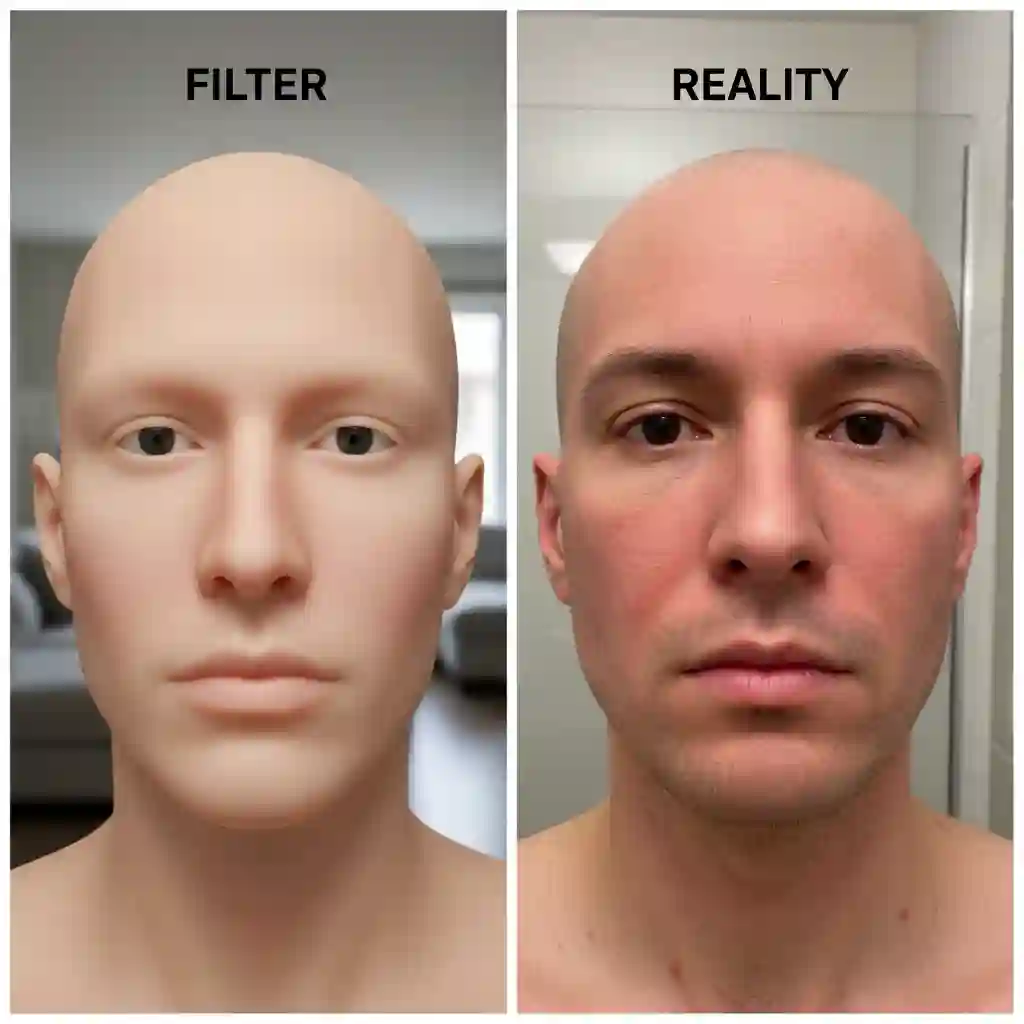
On social media, a beard remover filter can give you a clean-shaven look in a second. This instant gratification is appealing. But it creates a false impression that anyone can get the same flawless results with a beard removal laser. The hard truth is that laser technology for beard removal is highly selective. You might not be the ideal candidate.
3.1 The “Golden Rule” of Skin and Hair Color
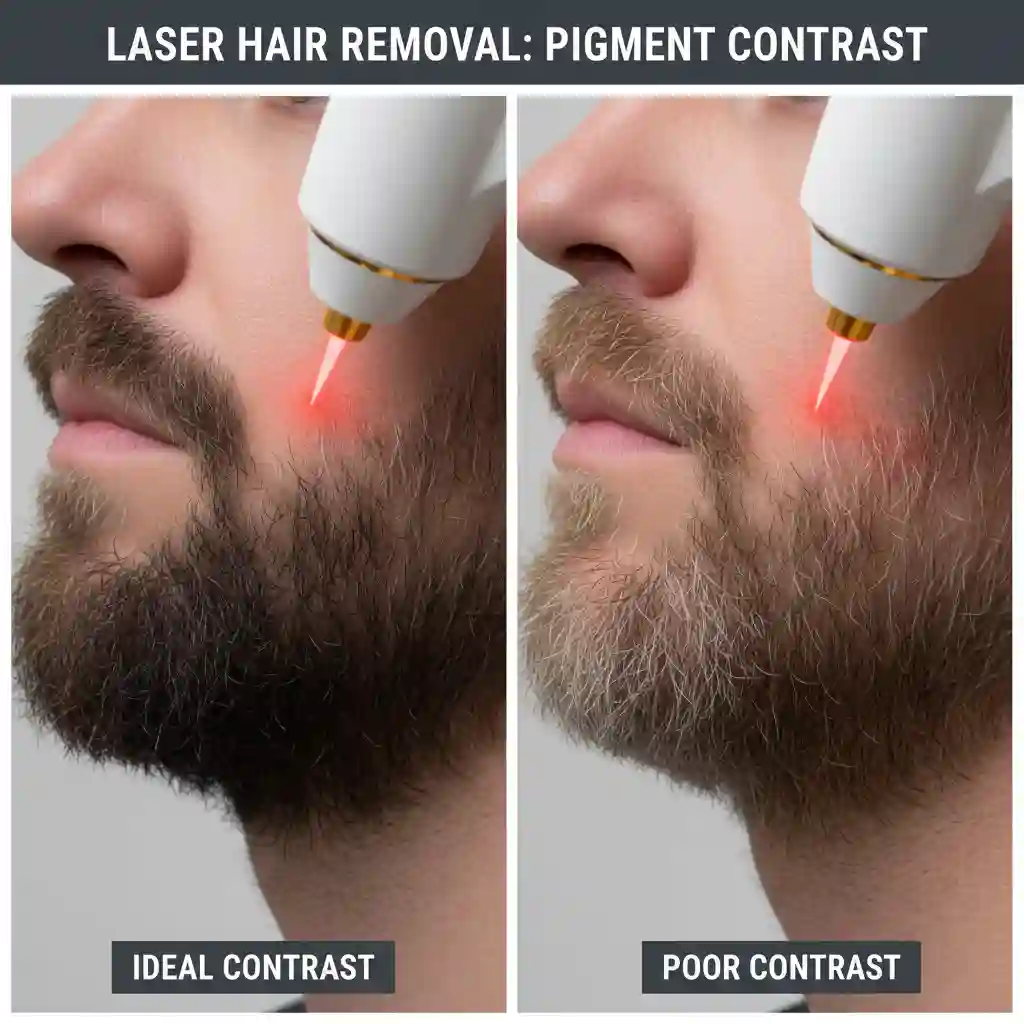
The principle behind laser hair removal is simple. Dark melanin in the hair absorbs the laser energy. This energy heats the follicle and destroys it. This science creates a "golden rule." The darker your hair and the lighter your skin, the better. This combination makes the beard removal laser treatment safer and more effective. The contrast allows the laser to target the hair follicle. It does this without affecting the surrounding skin.
This means a beard removal laser is ineffective if your beard is blonde, red, grey, or white. There is no pigment for the laser to target. Older types of beard removal laser carry risks for individuals with darker skin tones. They can cause burns or pigmentation issues.
Fortunately, modern technology like the Nd:YAG laser helps. It has made treatments much safer for darker skin. However, it still demands an experienced technician to ensure a safe path to permanent beard removal.
3.2 The Grand Canyon Between Virtual and Reality
When you use a beardless filter, you see a smooth, blemish-free face. It doesn't show you the temporary redness. It hides the slight swelling that can occur after a real beard removal laser session. This virtual tool masks the entire process and individual variations. It also can't replicate the precision required for procedures like laser beard shaping. You need real skill to create clean lines.
The reality is that medical aesthetics is a careful process. It is not a one-click effect. It requires scientific assessment and professional execution. Do not use a filter’s perfection as your expectation for a beard removal laser. If you do, you are setting yourself up for disappointment.
3.3 How to Know for Sure If You're a Candidate
So, how can you tell if you are a good candidate for a beard removal laser? There is only one way: a professional consultation. Any reputable clinic will insist on a thorough assessment. They will require this before beginning any treatment plan.
During this consultation, a specialist will analyze your skin tone and hair type. They will explain the results you can realistically expect. The most crucial step is the 'patch test.' The technician will fire the laser on a small, discreet area of your skin to see how it reacts.This simple test confirms your suitability. It also helps determine the safest, most effective energy settings for you. Now that you know how to assess candidacy, you need to be ready for what the procedure itself involves. This is the only way to ensure your investment is both safe and effective.
This post collects stories from men who had their full beards treated with laser, discussing whether they regret it, how their facial appearance changed, and how it affected their sense of gender expression.
4.Cruel Truth #4: It’s Not a “Lunchtime Procedure”—Pain and Recovery are Real
Some marketing materials portray the beard removal laser as a quick and easy "lunchtime procedure." This claim is misleading. The reality is that the treatment involves some discomfort. It also requires a necessary recovery period. You need to know what the process entails. This will help you prepare. You can then be ready mentally and physically for your male facial hair removal journey.
4.1 An Honest Description of the Pain
Let's be upfront about the pain. Any claim that the beard removal laser is completely painless is simply not true. The most common description is a sensation "like a rubber band being snapped against the skin." The face, especially the upper lip, has more nerve endings and higher hair density. Because of this, the sensation is often more intense than laser hair removal on other parts of the body.
The good news is that the discomfort is brief and manageable. Each laser pulse lasts only a fraction of a second. While it's not a comfortable experience, it is far from unbearable. This is the small price to pay for achieving permanent beard removal.
4.2 The Step-By-Step Reality of a Session
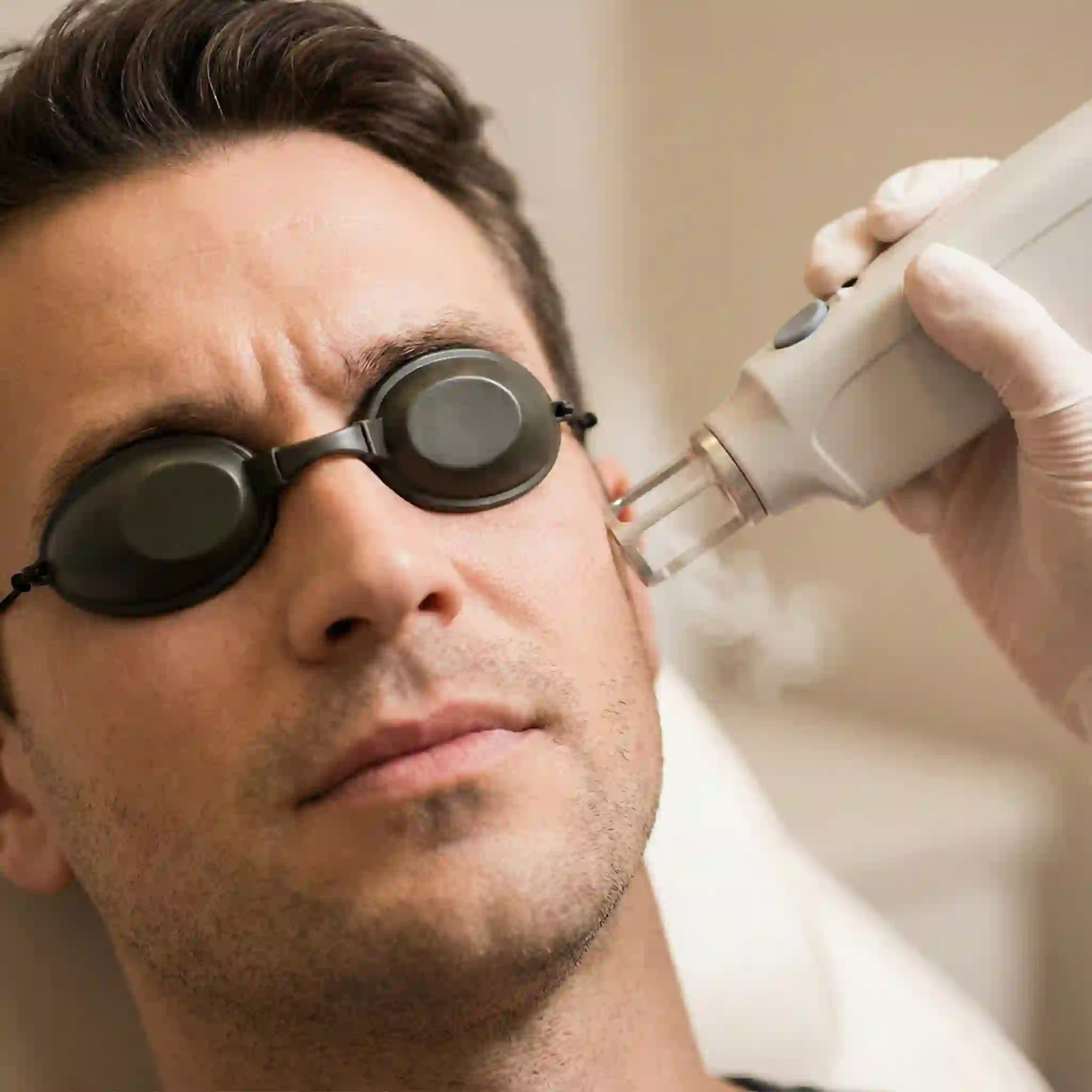
A professional beard removal laser session follows a strict protocol. First, the technician will thoroughly cleanse your face. They may also mark the treatment area with a white pencil, which is especially important for precise laser beard shaping. Next, they will apply a cool gel to your skin. This gel helps protect your skin and allows the laser to glide smoothly.
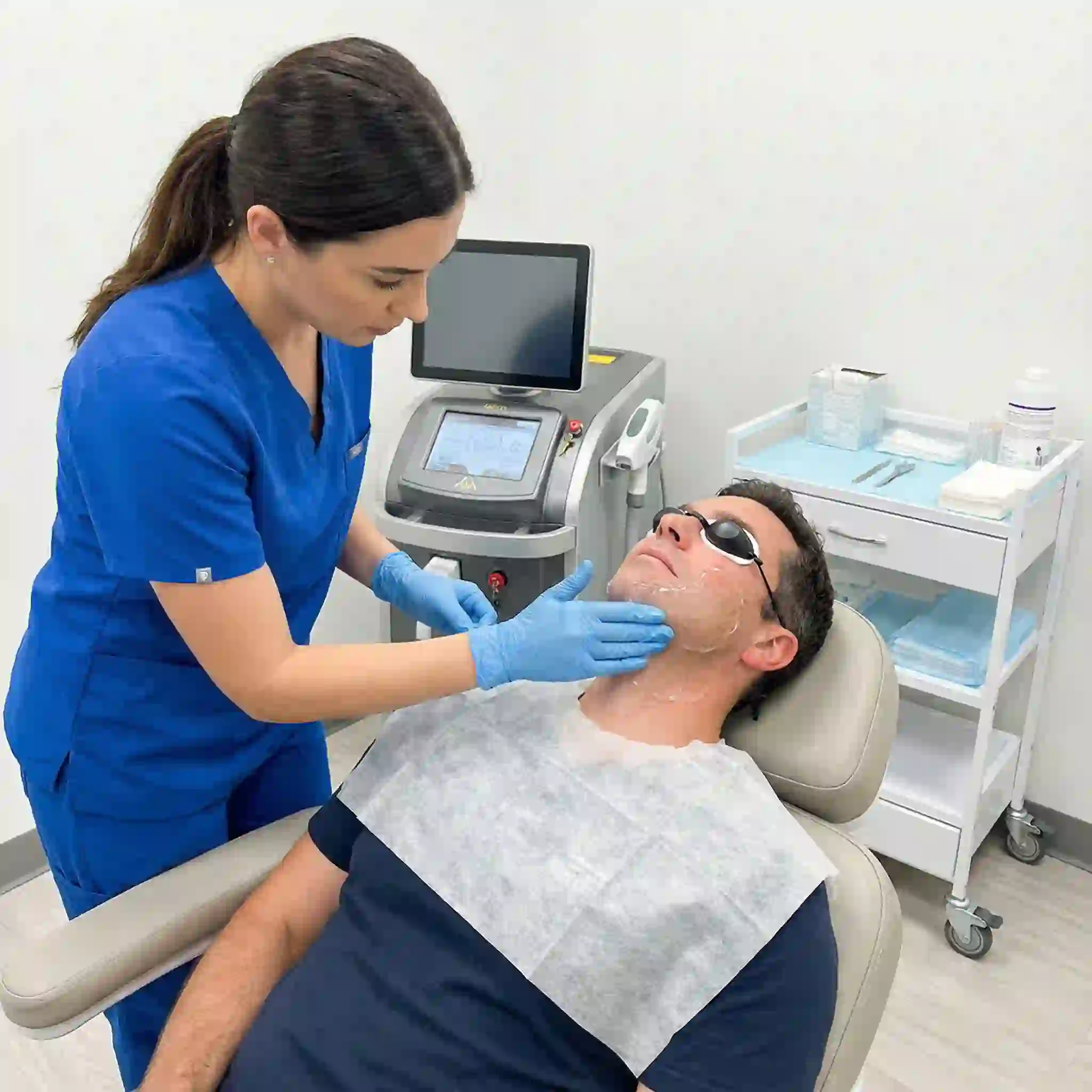
Both you and the technician will wear protective goggles. The technician will then use a handheld device. They will press it against your skin to deliver laser pulses, section by section. You will hear beeping sounds from the machine and feel that snapping sensation.
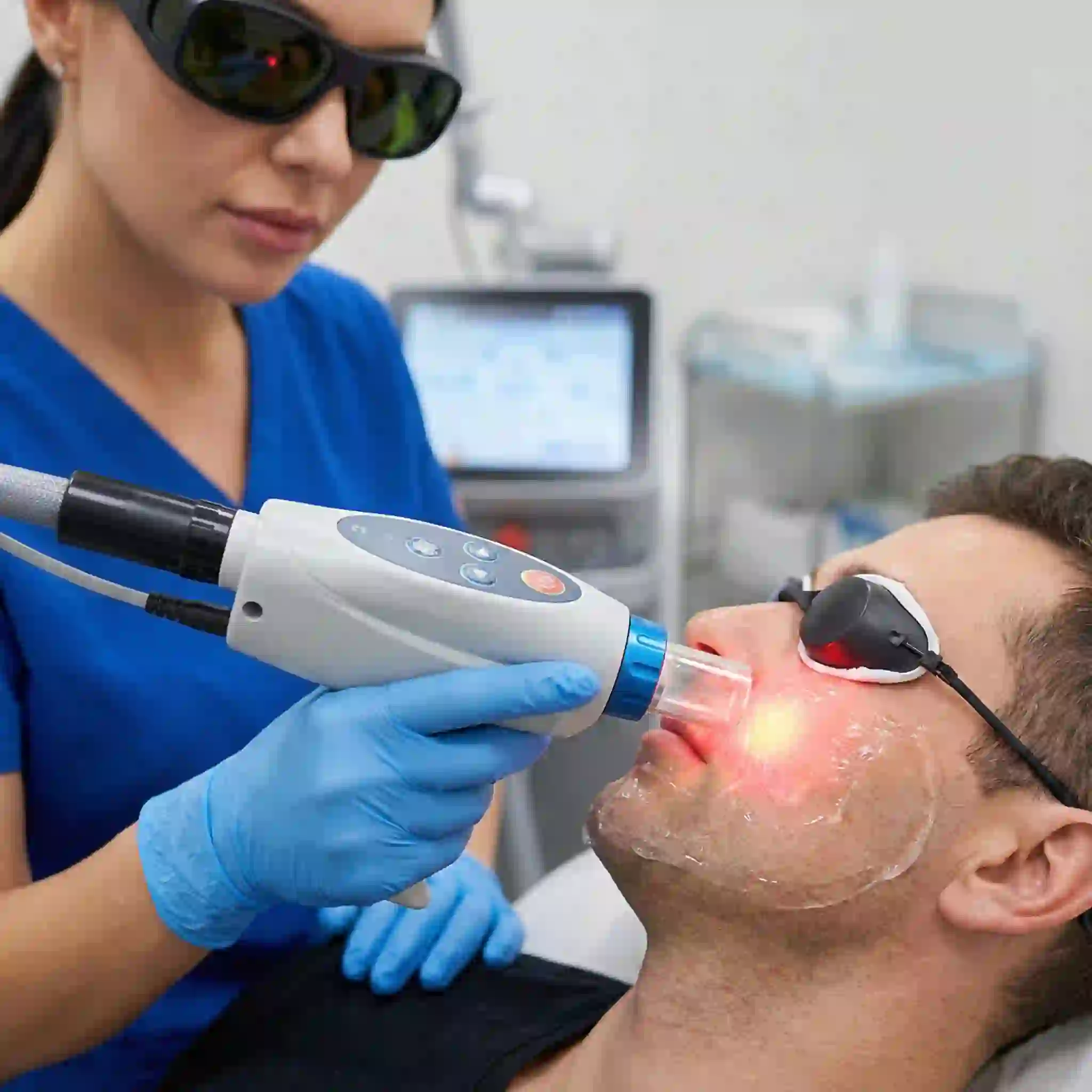
Thankfully, most modern beard removal laser devices feature advanced cooling systems. These might include a chilled tip or a stream of cold air. This technology instantly cools the skin, dramatically improving comfort.
4.3 The "Awkward Phase" After Treatment
Your skin will not look perfect the moment you leave the clinic. You will enter a brief "awkward phase." The most common side effects are redness and slight swelling around the hair follicles. The redness is similar to a mild sunburn. The swelling can look like small red bumps. This reaction is completely normal. In fact, it is a positive sign. It means the laser, acting as a powerful beard remover, has targeted the follicles.
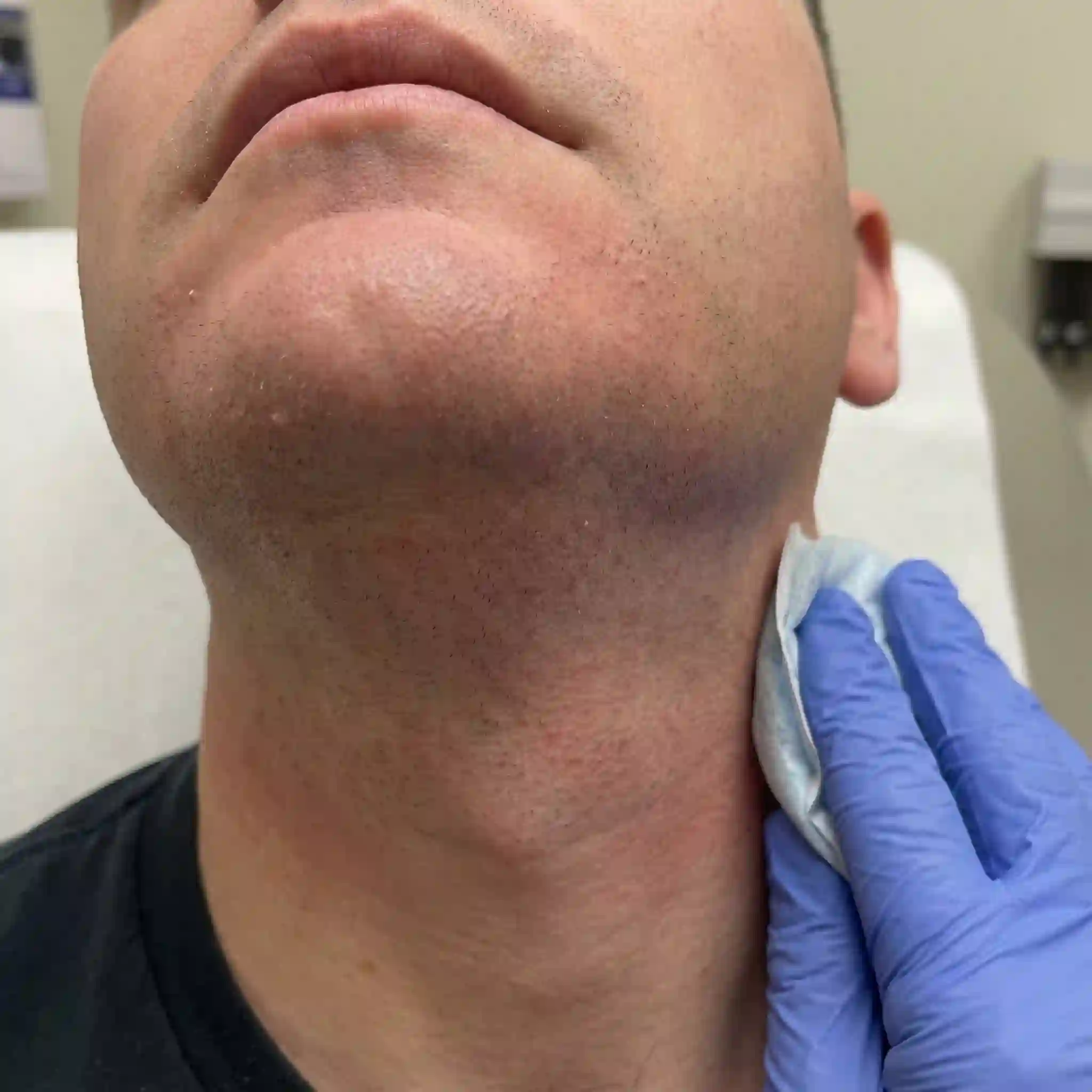
These symptoms usually subside within a few hours to a day. For example, Mark, an office worker with sensitive skin, shared his experience. After his first laser session for beard removal, his chin looked a bit bumpy.

However, it had almost completely calmed down by the next morning. He stressed that the most critical part of his aftercare was strict sun protection. The treated skin is sensitive to UV rays. Exposure can cause pigmentation issues.
5.Cruel Truth #5: Results Aren't Identical—Reading Between the Lines of Before and After Photos
The most persuasive marketing tool for the beard removal laser is a gallery of stunning before-and-after photos. They showcase dramatic transformations from rough to smooth. The hard truth is that these photos only tell part of the story. Not everyone’s beard removal laser journey will yield the same results.
5.1 How to Critically Analyze Comparison Photos
When you browse these images, be a savvy observer. First, pay close attention to the lighting and angles. A photographer might take a "before" photo under harsh overhead light. This emphasizes every pore and flaw. In contrast, the "after" shot might use soft, flattering frontal light. This makes the skin appear smoother. Also, be wary of images that look edited or airbrushed.
Valuable before-and-after photos will show you the authentic details. Look for a significant reduction in hair density. Notice improvements in skin condition, like fewer razor bumps. See an enhancement in skin texture. A great beard removal laser treatment improves skin health. It does not simply remove hair.

5.2 Showcasing ‘Real’ Transformations
With that said, professional beard removal laser can and do produce incredible results. For instance, Case A features a man who suffered from chronic razor bumps on his chin. His photos after eight sessions show that his beard is gone. More importantly, they show that his skin is clear and healthy. This is a core benefit of professional male facial hair removal.
There is a client wanted a sharp, professional look without removing his entire beard. He opted for laser beard shaping. His before-and-after photos clearly show a permanently clean, defined neckline and cheekline. This freed him from the daily hassle of trimming the edges. It demonstrates the precision and power of the laser beard shaping technique.
5.3 Setting Your Personal Expectations
Finally, it is important to remember that your results will be unique to you. Everyone's body is different. Many factors influence the outcome of your beard removal laser treatment. These factors include your hormone levels, hair density, and color. Your adherence to the treatment schedule and aftercare instructions is also crucial.
Therefore, do not treat a photo you see online as a guarantee of your future outcome. The best approach is to consult an expert. They can set realistic goals for you based on your specific condition. A successful beard removal laser experience begins with an honest conversation and requires reasonable expectations.
| Brutal Truth | The Reality & Advice |
|---|---|
| 1. "Permanent" isn't 100% Gone | Expect 80-95% reduction. Touch-up sessions will likely be needed. |
| 2. Real Cost is Higher | Requires multiple sessions (costly upfront), but cheaper than lifetime shaving. |
| 3. You Might Not Be a Candidate | Dark hair/light skin is best. Consult a pro for a patch test first. |
| 4. Pain & Recovery are Real | Feels like a rubber band snap. Brief "awkward phase" with redness is normal. |
| 5. Results Aren't Identical | Don't trust all photos blindly. Genetics and adherence play a big role. |
6.Final Thoughts
The purpose of revealing these 5 “brutal truths” about beard removal laser was not to scare you away. It was to arm you with knowledge. You are no longer just a consumer swayed by advertisements. You are now an informed decision-maker. You understand how to separate fact from fiction.
With this knowledge, you can see that successful male facial hair removal is about more than just getting rid of hair. It is a scientific investment that can genuinely improve your quality of life. A well-chosen beard removal laser treatment saves you countless hours. It can also solve years of skin irritation.
These threads explore why beard removal laser is sometimes seen as “taboo” for men, and share first-hand experiences from guys who actually went through beard removal laser sessions, making them some of the most valuable references when deciding whether beard removal laser is right for you.
Certainly, if you want to experience harmless beard trimming, you might as well try our product – a beard remover. It allows you to intelligently remove beards from photos through an AI model without actually shaving, and this innovative approach can be a great alternative to the beard removal laser that many people are paying attention to now. Use this AI-powered beard removal to preview permanent beard removal results
In addition, you can compare the convenience, irritation risk and long-term cost of beard removal cream with traditional razors when removing men's facial hair, so as to judge whether to switch to the more advanced beard removal laser, a solution that combines efficiency and gentleness and is gradually becoming a mainstream choice for modern men who pursue high-quality grooming, and choosing the right beard removal laser can also help you achieve a more long-lasting and comfortable beard-free effect. Read this 2025 grooming guide comparing beard removal cream
Now that you know the brutal truths and realities, are you ready to learn how to prepare effectively? Read our full expert breakdown on laser beard removal experts.